It is with a heavy heart to share the news that Theanos Thrax, AKA Anomalous Thracian, passed away on the 11/11/25 because of a catastrophic housefire. Anomalous Thracian was known as a spiritual adviser and ritual specialist in the general and wider polytheist and pagan community. He was also an animal rescuer and conservationist, particularly his beloved, numinous, snakes dedicated to Sabazius, and famous African raven, Gimbal.
All sadly gone due to the fire.
He has left behind his spouse and adult children, who are now calling for donations to help recover from this tragedy. Please open your pockets.
Horns Magazine is a gay-focused, LGBTQIA+ pagan/occult magazine. It features different voices from our various communities and includes beautiful homoerotic images (obviously NSFW and 18+).
I write for Horns Magazine, covering the history of LGBTQIA+ deities and spirits from ancient and contemporary paganism and other religions.
In the anniversary Halloween edition, Issue #12, I have written about the Aztec Flower Prince god, Xōchipilli. Xōchipilli was a challenging god to research and write about, as there is contradictory information about him from Aztec culture. This is largely due to Spanish attempts at erasure of Aztec customs and religion. It is widely believed that he is the patron god of homosexuals and trans/third-gendered people. Xōchipilli was celebrated every summer during a peaceful festival of love and flowers. Offerings of butterfly-themed dances and butterfly-shaped bread were given in his honour. This is likely why in Mexico today, the word for butterfly mariposa is used as a slur towards gay people. Anyway, enough spoilers, go read it for yourself. And of course, the other wonderful writing and art from the talented magazine contributors.
Digital download of the magazine is available now, physical copies will be for sale in the near future.
Happy Halloween to everyone who celebrates it! May it be spooky and horny!
Content Warning: It should be obvious that this article discusses adult themes, including topics of sex, violence, and SA.
Foreword & Notes: The intention of this article was originally written for the Dionysian Wiki; however, as it ballooned out to almost 3,000 words, I thought it would be better to rewrite a more concise version for the Wiki in the future and publish this article here. In the mythology section, I purposefully left out a discussion on Attis and Agdistis, as those deities are meant to be covered in their own articles. That said, they do have relevance to the topic and Dionysus, so I would highly recommend researching their myths if you’re interested. In addition, I would recommend my article on the Pine Tree for more information regarding trees, the phallus, and castration. My spelling/style is designed for the Wiki, which is US-based and uses the Latin spelling of Dionysus and other gods.
The Nile Delta from Space, Public Domain
The phallus is a symbolic or literal representation of a penis. It is a symbol found in many world religions. For Dionysians and Hellenic Polytheists, it has a multitude of meanings, including: death, destruction, family, fertility, life, magic, manhood, Mystery, power, and protection.
History
Icons of ithyphallic deities exist throughout prehistory. The most ancient phallus in Europe, dating to 28,000 years, was discovered in Germany (1) and some of the earliest depictions of an assumed ithyphallic wine god, found in Georgia, date to the 6th Millennium BCE. (2) Greek and European symbolism is possibly Indo-European in origin, as its meaning is shared throughout the world from ancient (and modern) Celtic, East Asian, Egyptian, Indian, and Germanic cultures.
A commonality of ithyphallic gods is the loss or castration of their penis and restoration/reparations, examples are Attis, Dionysus, Osiris, Phanes, Priapus, Shiva, Ouranos, and Zeus. This loss and restoration are sometimes associated with the transition of power from one god to another (Phanes and Ouranos), or an evolution of the god, a greater understanding, wisdom, and maturity (Dionysus, Osiris, and Shiva).
In Hellenic and Roman cultures, the phallus was often utilized as an apotropaic symbol, sometimes displayed on shields or worn as a charm to protect children. (3) It also featured on buildings and Herms to help protect and safeguard homes and businesses.
Symbolism
“Freud thinks primitive man preened himself on his ability to put out a fire with a stream of urine. A strange thing to be proud of but certainly beyond the scope of woman, who would scorch her hams in the process. Male urination really is a kind of accomplishment, an arc of transcendance. A woman merely waters the ground she stands on.” Sexual Personae, Camille Paglia (4)
As observed by Freud and Paglia, the symbolism of the phallus is that of a magical object. Men are able to perform “miracles” by standing while urinating, and the act of putting out fire with their penis, or watering the ground, links back to the process of rain and storms. Likewise, the fertility of the soil and the fertility of the womb, the sky god and the earth goddess. The phallus is thus a magic wand, an object of power that transforms shape from states of flaccid to erect and is capable of creating life.
In addition to the above Paglia quote, she notes that animals mark their territory with urine, and primitive man did something similar. The phallus in antiquity was often used as a boundary marker, sometimes a literal signpost in the form of ithyphallic Herms. These were at first stone cairns, maybe even gravestones, but evolved into a pillar with a phallus on it. (5) The phallus and gods like Hermes and Dionysus are liminal psychopomps that can transcend boundaries from life to death. The liminality of the phallus is evident in the act of sex, with the penis entering and exiting an orifice.
The patriarchal societies of Ancient Greece regarded semen to be the generative component of pregnancy. The word “sperm” comes from the Greek literally meaning ‘seed’ Sperma (σπέρμα). Aristotle had a misogynistic belief that semen contained masculinity and was thought to hold the wisdom and knowledge of men. This knowledge was only transferred from father to son. The daughter inherited the attributes of their mothers. (6)
In apotropaic magic, the penis can also be used as a weapon, with the act of sex, penetration, potentially considered violent. Thus, it was a ward against the “evil eye”, the counterpart to the phallus, like the gaze of the Gorgon/Medusa. In a mosaic from the “House of the Evil Eye” in Antioch, the phallus is depicted ejaculating on the evil eye. (See below image) (7) Romans also used the threat of rape by Priapus to warn off thieves in gardens:
“I warn you, my lad, you will be sodomised; you, my girl, I shall futter; for the thief who is bearded, a third punishment remains.” A Roman epigram dedicated to Priapus, a threat to would-be thieves. (8) (9)
Plutarch was aware of the comparisons between the Osiris and Dionysus dismemberment myths (see below), and related the phallus to the Nile, or any river, moisture, and fruit trees, symbolic of wetness, procreation, and fertility. As rivers empty into the sea, they mimic the myth of dismemberment as the river loses its identity. (10) Walter Otto additionally links the moisture of the phallus with the fig tree due to its milky-like sap resembling semen and associated myth as the first dildo (see below). (11)
The Greek dream interpreter, Artemidorus, had several meanings for the phallus, connecting it with blood relations, children, family, material possessions, necessity, ownership, slavery, and wives. (12)
“House of the Evil Eye” mosaic, various animals attack the eye. The elongated phallus of the male figure is pointed at the eye from his backside. “KAI SU” (top left) means “and you (too)”. Public Domain
Dionysian Connections
Dionysus is an unusual ithyphallic god, in that he is rarely depicted as sexualized, or with an erect or enlarged penis. Instead, in art, his followers are the ones engaged in these acts, like phallic satyrs, centaurs, and animals like cockerels, bulls, donkeys, and goats. In orgiastic scenes, Dionysus appears almost asexual, disengaged, or apart from the scene before him. (13) Carl Kenyeri notes that in comedic satyr plays, all the actors, except the one playing Dionysus, wear leather phalli as part of their costume:
“[…] so that it became an accessory of comic actors and was also set up as a choragic monument. The god never wears it, but his companions, the sileni and satyrs, are ithyphallic.” (14)
This is because Dionysus is the literal representation of the phallus in human form, similar to how he is represented as a pole or tree – an alternative phallic symbol. (15)
According to Herodotus, Phallic processions were introduced to Greece by the Dionysian prophet and hero, Melampous. These processions included a large wooden phallus that was decorated with wings and pulled on a cart or had wheels attached to it. Jennifer Lawson states that this phallus was a literal representation of the god and served as a temporary simulacrum, as it was disposed of into the sea after the festival. (16) Walter Burkert also mentions this festival and believes the disposal of the phallus at the end of the festival is symbolic of the sacrificial castration of Dionysus. (17) This is further supported by Plutarch, as mentioned previously, who associated the phallus with rivers entering the sea, symbolic of castration.
The winged phallus and its associations with birds were a common symbol in antiquity, as exemplified in the phallic columns found in the Stoibadeion, a temple to Dionysus on the island of Delos. Carved into these columns are cockerels with elongated necks to represent a penis. (18) Winged phalli also feature regularly in Roman artwork. Euphemisms between birds and the penis persist today in European languages like the English word: “Cock”, the Italian “Uccello” (bird), the Czech “Ptak a vejce” (bird and eggs), Spanish “Polla” (cock), etc.
A cosmetic lid featuring a winged phallus and three vulvae. 460–425 BCE. CC: Marsyas
Mythology
In antiquity, the similarities between the Osiris and Dionysus dismemberment myths were noted. (19) The general Egyptian story is that Osiris was murdered by his brother Set, who cut up Osiris into numerous pieces and scattered them throughout Egypt. Osiris’s wife, Isis, mourns the loss of her husband and, with the aid of other gods, collects his body parts. Isis breathes life into Osiris once again, but this is only temporary. She copulates with him and conceives his future son Horus. It’s in Plutarch’s account that Set buries each part of Osiris’s body except his penis, which is disposed of in water and eaten by fish. Isis is forced to reconstruct his penis with magic.
Carl Kerenyi recounts a similar myth that he believed originated from the Hittites and was adopted by archaic Greeks. The myth features Zeus fighting the dragon Typhon on Mount Kasion. Zeus wrestled with the dragon, but Typhon took a sickle and severed Zeus’s tendons, (Kerenyi believes this to be a euphemism for the male member), removing his hands and feet and hiding the body parts in a bear skin sack (Korykion antron), this sack was protected by the dragoness Delphyne (related to Delphi), but eventually stolen by Hermes and Aigipan (Goat Pan) who reconstructed Zeus to continue the battle against Typhon, defeating the dragon. This myth is likely a precursor to the later myth of Apollo slaying the Python and the establishment of Delphi as a cult center. (20)
The Orphic myth of Zagreus is fragmentarily recorded as early as the 5th century BCE (21) but elaborated on later in history. In the myth, Zeus has an affair with Persephone, and she births Dionysus Zagreus (the hunter, the first Dionysus). Zeus recognizes Zagreus as a supreme godchild and gives the infant the scepter and throne of the cosmos. Hera, irate and jealous of this affair and the transition of power, released the Titans upon Zagreus. However, the Titans were unable to approach the powerful god who continuously changed forms from various creatures and monsters. The Titans conceived a plan to fool the child, disguising themselves with chalk face paint and tempting the child with various toys. Zagreus was disinterested in the toys except for the mirror, entranced in his own reflection, Zagreus dropped his guard, and the Titans pounced on the child, tearing him into pieces. They boiled and roasted his body parts, except his penis and heart, and ate him. Zeus smelled the foul odor of the ‘meal’ and returned to find the atrocity. In fury, he blasted the Titans with a thunderbolt, disintegrating them. From their ashes arose humanity, humans, thus composed of Titanic and Dionysian elements. Either Zeus or Athena saved the heart of Zagreus, which was used to impregnate Semele, the future mother of Dionysus. The penis of Zagreus was saved by the Cabeiri (in some versions, the protectors of Zagreus), they took his penis to Samothrace and established a Mystery cult around it (see below). (22)
Phanes, again considered an Orphic god, sometimes regarded as a progenitor to Dionysus, is also recorded as being cannibalized, but in this case, it is Zeus himself who eats Phanes to consume his power for the cosmos. This myth is chronologically before the Zagreus myth, but specific details of the myth regarding the phallus have only recently come to attention with the translation of the Derveni papyrus (originally written in the 5th century BCE, additional notes added in the 4th century BCE). In the fragmentary papyrus, Zeus consumes the “pillar/rod” (phallus) of the cosmic sky god (addressed as Ouranos but sometimes considered Phanes). During this act, the cosmic sky god ejaculates into Zeus, which transfers the power to Zeus, allowing him to order the universe to his will. This narrative serves to illustrate that the phallus and semen are symbols of power. (23)
The following myth is recorded in its entirety by Clement of Alexandria, a 2nd-century CE Christian apologist and critic of paganism. (24) However, it is mentioned by Pausanias (25) and Pseudo-Hyginus. (26) In the myth, Dionysus desires to petition Hades for the soul of his mother and seeks the entrance to the underworld at Lake Lerna (in Argos). Lost, he requests the aid of a local shepherd Prosymnos (also known as Polymnos and Hyplipnus). Prosymnos agrees to help the god on the condition that they have sex. Dionysus vows to fulfil the shepherd’s request after his journey. In agreement, Prosymnos shows him the entrance. When Dionysus returns from his adventure, he discovers that Prosymnos has died. Dionysus instead seeks an alternative to his vow, he fashions a phallus from fig wood and finds the grave of Prosymnos, fulfilling his promise by ‘sitting’ on the phallus on top of Prosymnos’s grave. Clement of Alexandria attributes all Dionysiac phallic iconography to this myth, though that is likely incorrect. It is possibly related to a local Mystery cult in Argos. Carl Kerenyi notes the similarities of this myth with that of Osiris and Isis. Instead, Dionysus is taking on the procreative role in what is otherwise reserved for women. (27) Being a passive person in anal sex was considered effeminate in antiquity; thus, the myth can be translated as a form of castration, a loss of masculine power. (28)
Related Myths: Agdistis, Attis, Priapus, and Ouranos/Uranus.
Mystery Object
As mentioned above in symbolism, the phallus was utilized in public rites and openly displayed. However it was also a private Mystery object. In the Thiasus processions, a phallus was carried in a basket (liknon, cista mystica). This phallus was either a carved wooden icon or from an animal (a goat penis). (29) As we are unaware of the rites performed during the Mysteries, conjecture has to be used. The phallus was likely considered a literal icon of Dionysus and an object of procreation and rebirth. It was probably given as a sacrifice and buried or burned in his honor. Kerenyi and others have noted that a possible holy sexual act was performed or enacted, symbolic or literal, is unknown. The most famous example of Hieros Gamos (sacred marriage) was performed during the Anthesteria festival on the day of Choës. The symbolic queen of Athens (Basilinna) “married and consummated the marriage” to Dionysus at the end of the festival – how this rite was performed is largely unknown. (30)
Regarding Lake Lerna and the Prosymnos myth, Pausanias mentions that at the lake, “The nocturnal rites performed every year in honor of Dionysus I must not divulge to the world at large.” (31) This could mean anything, but given the scandalous writing of Clement of Alexandria, these nocturnal rites likely involved the phallus.
The Samothrace Mysteries are one of antiquity’s least understood established Mystery cults. It focused on the “Great Gods” and the Cabeiri, ithyphallic satyr-like dwarves, typically the sons of Hephaestus. As mentioned in the Zagreus myth the Cabeiri saved his penis and took it to Samothrace. Herodotus was apparently initiated into these Mysteries and claims that they were established by the Pelasgians (native Greeks), it is from the Samothrace Mysteries that the ithyphallic Herms were introduced to Athens, in regards to the phallus and the Mysteries, Herodotus says, “The Pelasgians told a certain sacred tale about this, which is set forth in the Samothracian mysteries.” (32) Finally, I’ll leave this article with a quote from Plutarch, which describes the simplicity of Dionysiac celebrations as: “A wine jar, vine, a goat, a basket of figs, and then the phallus” (33)
Sources:
1.http://news.bbc.co.uk/1/hi/sci/tech/4713323.stm Accessed: 2025 2.https://www.bbc.com/news/world-europe-41977709 Accessed: 2025 3. D Paleothodoros, Satyrs as Shield Devices in Vase Painting, 2001 4. Camille Paglia, Sexual Personae: Art and Decadence from Nefertiti to Emily Dickinson, page 24, 1990 5. Walter Burkert, Greek Religion, 1977 6. Maryanne Horowitz, “Aristotle and Woman,” Journal of the History of Biology, 9, 2 , pp. 183-213, 1976 7. https://europe.factsanddetails.com/article/entry-1167.html Accessed: 2025 8. Priapeia (trans.Leonard C. Smithers, Richard Francis Burton,1995) Note: a collection of epigrams dedicated to Priapus 9.https://www.maicar.com/GML/Priapus.html Accessed: 2025 10. Plutarch, Isis and Osiris, (trans. Frank Cole Babbitt, 1936), pages 81 – 83, 2nd Cent. CE 11. Walter Otto, Dionysus: myth and cult, page 158, 1933 12. Artemidorus, Oneirocritica, [On the Interpretation of Dreams] 1.45 (Trans. Robert J. White, 1975) 2nd century CE https://www.attalus.org/translate/artemidorus.html Accessed: 2025 13. Michael Jameson, Cults and Rites in Ancient Greece: essays on religion and society: The Asexuality of Dionysus, 2003 14. Carl Kerenyi, Dionysos: Archetypical Image of Indestructible Life, Page 285, 1976 15. Walter Otto, Dionysus: myth and cult, page 157, 1933 16. Jennifer Larson, Ancient Greek Cults: a guide, page 129, 2007 17. Walter Burkert, Homo Necans: The Anthropology of Ancient Greek Sacrificial Ritual and Myth, page 71, 1972 18. Jennifer Larson, Ancient Greek Cults: a guide, page 129, 2007 19. Plutarch, Isis and Osiris, (trans. Frank Cole Babbitt, 1936), page 87, 2nd Cent. CE 20. Carl Kerenyi, Dionysos: Archetypical Image of Indestructible Life, Pages 46-47, 1976 21. Aeschylus, Fragment 124 Sisyphus (from Etymologicum Gudianum 227. 40) (trans. Weir Smyth) 5th Cent. CE 22. Clement, Exhortation to the Greeks 2. 15 (trans. Butterworth) 2nd Cent. CE 23. Dwayne A. Meisner, Orphic Traditions and the Birth of the Gods, chap 2, 2018 24. Clement of Alexandria, Exhortation to the Greeks 2. 30 (trans. Butterworth) 2nd Cent. CE 25. Pseudo-Hyginus, Astronomica 2. 5 (trans. Grant) 2nd Cent. CE. 26. Pausanias, Description of Greece 2. 37. 6 (trans. Jones) 2nd Cent. CE 27. Carl Kerenyi, Dionysos: Archetypical Image of Indestructible Life, Pages 310 – 311, 1976 28. Walter Otto, Dionysus: myth and cult, page 176, 1933 29. Carl Kerenyi, Dionysos: Archetypical Image of Indestructible Life, Page 354, 1976 30. Carl Kerenyi, Dionysos: Archetypical Image of Indestructible Life, Page 171, 1976 31. Pausanias, Description of Greece 2. 37. 6 (trans. Jones) 2nd Cent. CE 32. Herodotus, The Histories, book 2, capt 51 (trans. A. D. Godley, 1920), 430–440 BCE 33. Walter Otto, Dionysus: myth and cult, page 164, 1933 (Note: quoting Plutarch)
This is for personal study and isn’t designed for academic use. I thought I’d share this here as a resource, as it includes interesting quotes and references to certain subjects. These notes are by far from comprehensive, but I still use them as a go-to reference.
(Edit: apologies for initially misspelling Kerenyi’s name. I get n’s and r’s confused, it’s a dyslexic thing.)
Dionysus: Myth and cult by Walter Otto (1933), Translated by Robert B. Palmer (1960) ISBN 978-0-253-20891-0
“The Pharmakos was led around the entire city to absorb every Miasma. He was then killed and burned or taken over the boarder of the country, just as one wipes a dirty table off with a sponge and then throws the sponge away.” P39 (Nilson, 112.F)
“Grim customs like these offset by more cheerful ones […] It was the custom in Tanagra for the handsomest young man to walk around the city in the Hermes festival with a ram draped over his shoulders. The god himself, as the story goes, once freed the city from a pestilence by making the rounds in this way, and the ritual was established to commemorate this event.” P43 (Pausanias 9.22.1.)
Note: Semele is the Phrygian name of the Earth Goddess and that Bakchos is the Lydian equivalent for Dionysos. P60 (This statement is questioned by Otto) Note: “Bakchai” a group of followers of Dionysos, “Nysai” a group of Nurses. P61
“According to the legend of Brasiai on the Laconian east coast, the child Dionysos was supposedly washed up on the shore in a chest together with Semele, and, since his mother was no longer alive, he was raised in a grotto by Ino.” P63, Pausanias 3.24.3.
“The one in the cradle” P82, Hesychius.
“[Whereas the gods] are invisible when they enter their temples on their feast days, Dionysos arrives in the flesh; ie., in a plastic image.” P83
“There can be no doubt, however, that Dionysus was thought and felt to be present with overwhelming certainty. He whom the women attend, he who always has a favourite at his side, stepped over the threshold of his earthly home and took possession of the mistress.” PP83-84
““Tree Dionysos”, Plutarch says, he was worshipped almost everywhere in Greece.” P87
Note: Masks of Dionysos Bakcheus and Meilichios were made from wood of grape and fig tree. P88
“Thus even the Gorgon is first supposed to have received her well-known masklike image because people once were in the habit of wearing her mask in apotropaic rituals.” P89
Note: Artemis Orthia is associated with Dionysos through her epithets. P104
“According to Nonnus Aura, too, the beloved of Dionysus, killed one of her new-born children and devoured it.”
Note from Nonnus: “The Indian Deriades complains of the impossibility of conquering Dionysos because the many-formed one was now a lion, a bull, a boar, a bear, a panther, a snake, and now a tree, fire, water” P110
“There is also a tradition that it was Dionysos who sent the sphinx to the Thebans.” P114
“The Agrionia (or Agriania, Agranoa) day of the dead P118 (Note: May have been linked to Anthesteria, the Agrionia took place one month after Elaphebolion.)
“In the new-born child the ancestor rises up out of darkness of death. This is the reason why the divinities of birth and fertility are so close to the divinities of death.” P138
“The madness which is called Dionysos is no sickness, no debility in life, but a companion of life at it’s healthiest.” “[…] it is the madness inherent in the womb of the mother.” P143
“Herodotus (says) there was an oracle of Dionysos in Thrace with a prophetess, as in Delphi.” P144
“This is why the Thebans considered an ivy-twined column sacred to the god and, in fact, called Dionysos, himself, the “One who is entwined around pillars”. “The spring at Thebes in which the nymphs supposedly bathed Dionysos after his birth was called Kissusa after ivy.” (Note Kissusa is another epithet for Dionysos.) P153
Note: according to Diodorus, the care of fruit, in general, is ascribed to him (Dionysos). P157
Pinetree ref P157
“Pindar: alludes to roses and violets with special affection, when it is said quite specifically, in fact, that “Bacchus loves flowers”, there, is nothing more in all this than that he happens to make his marvellous appearance in the beginning of spring, and the lovely progeny of earths floor announce his coming and adorn his path.” P159
“The charities from Orchomenus […] are called Dionysus and Aphrodite’s daughters. P164
“A wine jar, vine, a goat, a basket of figs, and then the phallus” – this is the description Plutarch gives us of the original simplicity of the Dionysiac celebration. P164
“Dionysos Melanaigis was Dionysus Morychos, “the dark one”.” P169
Note: Names of woman followers: Laphystiai, the Dionysiades, the Leucippides, the Bassarai, the Dysmainai, the Klodones, the Mimallones, the Lenai, the Genrarai. P175
“Aeschylus calls Dionysos “The womanly one” and Euripides “The womanly stranger”, and “man-womanish”.” P175
Note: Ariadne was closely related to Aphrodite. In Amathus Cyprus she was worshipped as “Ariadne Aphrodite.” P182
Note: Ariadne is said to have been buried in the Dionysian sanctuary. P182
Note: Ariadne had a sea crown, sometimes made of coral. Note: Ariadne has many links to the sea, including being a possible nymph that nursed Dionysos as a babe. P187
Note: the 8th of November was apparently the date of Dionysos “awakening” and on the island of Andros the None of January was his return with the sun. Chapter on Apollo discusses the possibility of Dionysos was in Delphi before Apollo’s cult. Starts P.202
Dionysos: Archetypical Image of Indestructible Life by Carl Kerenyi. Translated by Ralph Manheim 1976, reprint of the Mythos series 1996, ISBN: 0-691-02915-6
Part One
Notes on Chapter 1: The Spirit of Minoan Art: Zoe = indestructible life, Bios = dying life (rotting life, biodegradable), Physis = plant life. Kerenyi proposes Dionysos represents all aspects, though he is chiefly the archetype of Zoe. This is the core theme of the Kerenyi’s book.
Minoan Visions: Discusses Opium and the cultural influence on Minoan art.
Notes on Chapter 2: Light and Honey, Flaming New Year: Religious holidays set to the star Sirius, with the new year on the “dog day” summer solstice. This is observed in Olympia, Delphi, Athens and Epidaurus. “Hosian” a universal law that the even the gods cannot break. P30
Notes on Chapter 2: The Preparation of Mead: “According to Oprhic docrine, wine was among his last gifts.” P35 O. Kern, ed. Orphicorum fragmenta fr.116
“The original words “for to be drunk” and “to make drunk” are methyeim and methyskein. Rare and later is “Oinoun” (from oinos, wine) meaning “to intoxicate with wine.’ Echoes of Methy signify “honey’ not only in a number of Indo-European, but also a common Indo-European-Finno-Ugric stratum.” P36 (Cont. more details)
“Askos” An animal skin sack that was waterproof. P36
Notes on Chapter 2: The Awakening of Bees: Aristaios – domesticator of bees and mythical inventor of mead. P39
“Korykos” means leather sack P43
“Tainiai” narrow bands used to adorn sacred persons and objects. P44
“Liknon” a cradle and basket for sorting grain. Teos : Dionysian city in Aisa Minor. P45
“Pythia”, the Delphic oracle literally translated to “Delphic Bee”. P45
“Minoans gave a bull the name “Oinops” WO-NO-QO-SO (Linear B) meaning Wine coloured. P54 Note: Homer uses this name in regards to bulls.
In Greece the grapevine was called, “Hermeris” meaning “the tamed”. P57
In Attica Dionysos was called “Kissos” meaning Ivy. P63 (See notes from Otto)
“When grapes were pressed for wine people would sing a mournful song called “Lenos”. […] The second council of Constantinople, The Trullianum, 691 CE, formally banned the traditional song and crossdressing. P67
DI-WO-NU-SO-JO : Linier B for Dionysos. P. 68
Note: Interestingly, the name “Pentheus” is early recorded and likely was an epithet of Dionysos. It literally means “great Suffering”. (Mega Pentheus”) PP. 69 – 70
Note: Melampous, the (mythic) soothsayer and priest introduced phallic worship to Greece. P72
“The wooden masks that were used in the Dionysian cult, either worn by or hung on a pole or tree in the centre of the rite. The Zoe that is present in all living creatures became a spiritual reality a man opened himself to it, perceiving it in a kind of second sight.” P80
“[Zagreus] makes it seem highly probable that on the kydonia seal we have a representation of Cretan Dionysos. The god holds fast the lions, two living beats of prey, with his bare hands. He tames them as it were, by a “laying on” of hands. He draws them into his sphere of influence and holds them captive.” P82
“In Greek, a hunter who catches live prey is called Zagreus.” P82
“The pantheon was roofed, roughly between 450 and 400 BCE.” P97
Note: Daidalos, the mythical creator of the labyrinth, is related to oil, which was stored in the palace. Hinting that the connection of the labyrinth was associated with oil delivery. P100
“Ariadne’s name may indicate that she was a dark goddess, the goddess of the mountain. Related to another similar character Koronis the “Dark-crow-virgin” and the goddess Peresphone.” P103
Note: in coins Ariadne is connected with the moon. P104
Note: The Minotaur’s name is “Arsterios” or “Asterion” meaning Star or Starry. P105
“Artemis Apanchomene”, is the hung Artemis. P106
Note: Kerenyi links Ariadne to Persephone, making her Dionysos’s mother. These mother aspects are also mentioned by Otto. (Persephone being mother to Zagreus.) PP110-111.
[…] “though marriage with this heavenly dragon Persephone’s womb became fruited, prepared to give birth to Zagreus, the horned infant.” P114 (Nonnus VI 120-697)
“The ‘mystic’ feature which we have presupposed in the relationship between Dionysos and Ariadne here appears in an archaic myth in which generations of birth never go beyond the same couple. Taking his mother or daughter to wife, the son or husband begets a mystic child who in turn will court only his mother. To such involvement the snake figure is more appropriate than any other. It is the most naked form of Zoe absolutely reduced to itself.” P114 (Note from Markos: Ouroboros and the myth of Phanes.)
“The snake, the genius as a whole, was indestructibly precent, bearing witness to the indestructibility of life in what was, in a manner of speaking, it’s lowest form.” P115
In Latin: “Taurus draconem genuitet taurum draco.: English: The bull is father to the snake and the snake to the bull.” PP117
Page 118 Discusses aspects of the Mystery cults.
““Dionysos Meilichos” his mask carved of fig wood. The name applied to the subterranean Zeus, who appears in votive reliefs as an anormous snake. Seducer in caves.” ““Bakcheus” the ecstatic god of life.” P123
Part Two: The Greek Myth
Note: Kerenyi discusses that he does not think the Dionysian cult was a spontaneous fad, nor a “missionary cult”, even though certain myths make it out to be. He note that other Hellenic cults have similar myths of a gods arrival and “take over”, such as Apollon. P140
Note: Discussion on the thanksgiving festival that marked Theseus’s return from Crete. This includes thanks to Dionysos for taking Ariadne in exchange for safe passage. PP145-146
Note: In Athens the festival Choës Day with the Aiora the “feast of the swings” signified the end of Erigone’s wanderings. It explains her myth of melancholy as the act of her hanging herself. Her death resulting in the marriage to Dionysos and her apotheoses to the heavens. Later the festival focused on her union in which saw ladies in waiting swinging on trees to advertise their availability for marriage.
“Swinging as a simple bodily activity, as a means of expressing intense joy of life.” “Swinging is also a natural magical action, for it artificially helps the swinger to attain an extraordinary state, hovering mid-air in a kind of ecstasy.”
“In this it so “more magical” than drinking wine. Between the two there is a kingship, but swinging involves still another element: an approach to the sky, to the sun and moon. The gloomy interpretation of the swinging […] [is to] atone for the death of Erigone by an epidemic of self-hanging […] the swinging was a substitute for this punishment.” PP156-158
Note: When Erigone ascends to heaven she becomes Virgo. P158
Note: Dionysos Melanaigis: “he with the black goat skin”. “They do not want the god in that form: they reviled him. Thereupon he makes them raving mad. In order to be cured, they obliged to worship Melanaigis, that is, the dark Dionysos in league with the spirits of the dead.” P163 (Suidae Lexicon) Note: Dionysos Melanaigis
“This cult was brought to Athens by Pegasos, a missionary. Offence caused impotence in men. Regarded as the seconded introduction to Athens.” “Axios Tauros” worthy bull. 173
Notes on: Myth of Arrival and Rite Outside of Attica: Thebes ad Delphi. A common theme in early myth is kings refusing to accept the “new” cult of Dionysos. Often the followers of Dionysos were beating, killed and in some instances Dionysos, himself, was beaten or slain. However, as a result of the king’s hubris, those that oppose Dionysos face his wraith:
A. King Lykourgos, the Thracian king that kills the nurses of Dionysos and beat the god to the sea (Homer) The king either goes insane or his own people kill him. B. The daughters of Minyas, they ignore and didn’t respect Dionysos when he arrived resulting in their madness. C. Perseus “killed” Dionysos when the god arrived at Argos, Perseus threw his body into lake Lerna. Dionysos was called back as Dionysos Bougenes (the cow’s son). Lake Lerna is one of the mythical entrances to hades and upon Dionysos’s return he reconciled with Perseus and “converted” him. Perseus established a temple to Dionysos and Ariadne in Argos as “Dionysos Kresios” the “Cretan Dionysos”. P180
The introduction to lake Lerna leads to Dionysos’s second decent to hades to retrieve the soul of his mother, Semele. Kerenyi claims that Dionysos sacrificed his masculinity here, as the price for his decent was the promise of sex with a man and “feminization” by the act. The result was a permeant phallic cult at the lake. Kerenyi continues that the Argos cult was an early precursor to the Theban cycle, with the original king in Argos being Megapentheus, son of Proitos, king of Argos. Like Pentheus of Thebes, Megapentheus name literally means “man of great suffering”, though the suffering of the king in the Argos cult was directed towards the king’s sisters. The sisters going mad doomed to wander the land in a state of nymphomania. P186
Discusses the unusual connection Dionysos has with Hera, as in archaic myths it is Hera that deals out madness. There is a mention that according to cult rules ivy was prohibited in Hera’s temples, with the exception of her mad cultic features. PP186-187
Dionysos Trieterikos God of the Two Year Period. “Dionysos Pelekys” Dionysos of the Double axe. 192
“Pentheus into the name of a punished enemy of the god, who nevertheless in his suffering remained so close to the god to represent him. The contradictory nature of the tragic fate of a god who suffers and lets himself be killed – a god whose servant, indeed he himself, was the sacrificial ox – was embodied in a man who destroyed himself, a frequent character in later Attic tragedy.” P193
The Maenadic state of mind is called “Mainomenos” – usually a negative Then “Thyiadic” and “Epiphoitian”, verb: “Thyein” P198
“Enthousiasmos” the state and act of being filled with god. P200
Details the two year festive cycle outside of Athens, the first year to the subterranean Dionysos, sombre and mellow period. The second year was more celebratory of life – though there were race instances of “human sacrifice”. Sources of this are dubious as they are mostly from Christian critics. PP202-203
“He who leads the throngs become Dionysos”. P203
This two-year festival was held in secret by woman from around Attika. Dated at roughly the 8th of November. They journeyed up the mountain to Delphi in dangerous conditions. What occurred during these rites is a mystery, though related to life, death, and rebirth. PP214-215
“Heroen Brephos” the Horned Infant. P249
“[…] when the vine has been heavily pruned after the win harvest, the earth restores it in order that it may bear fruit again in due season” “This is consonant with what is said in the Orphic poems and presented in the mysteries”. Diodorus Siculus III 6Z 7-8 P249
A Greek and Roman custom was observed throughout to an extent that it was a kind of law, called “Talion” for when goats were admitted to a vineyard they “sinned” against the vine. “ “So it came about,” says Marcus Terentius Varro, “that the he-goat were sacrificed to Dionysos, discoverer of the vine, as though to make atonement, a head for a head.”” “ “Very well, eat my fruit bearing vines: the roots will still bear enough wine to pour on you when you are scarified.”” Leonidas of Tarentum, an ancient proverb of the vine to the goat. P249
Mention of wine cults in the East:
Dolukbaba in Syria, holy mountain of Jupiter Dolichenus
Great Hittie god, grapes, related to Doliche
Dursares “The Arabian Bacchus”
Sumerians had a goddess called “Heavenly Vine”
Arabian Djinn “Umm Unkud: mother of grapes. P256
Basket that held Dionysos’ heart “Cista Mystica” (also see: “Liknon”
Note: continues connection between the heart and the phallus, “Kradiaios” P260
Orphism has been termed “Religious-Philosophical-Literary movement that cannot be defined with precision.” Kerenyi, W. Fauth. P262
The Dionysos of The Athenians and his worshipers in Greek Mysteries “Kradiaios Dionysos” Figwood Dionysos. The mask belongs only to him […], it is only seemingly empty. Behind it dwells a world of spirits, which sends its inhabitants out onto the Dionysian stage. Anthesteria.
Pithoigia. “Opening of Jars” It is somewhat unknown why the “Pithoi” jars were opened on this day, but Kerenyi says it was an ancient rite: “[…] in the Mycenaean texts of Pylos clay tablets. Here the souls of the dead are called dipsion, the “thirsty ones”. They were thirsty not for water but, in the year Dionysos dwelt emasculated among them, for wine.” “Attracted by the smell of the wine that rose from the opened pithoi and spread throughout the city, the souls emerged from the underworld. No one, not even slaves, was prevented from drinking wine on this day.” P303
Choës “From the wine pitchers” “When the world is open, it is as though the gates of sad subterranean gods were open.” “Choës day was marked by an erotic atmosphere and the presence of ghosts an unusual phenomenon but not humanly impossible.” P303-304
-Chytori “The day of pots” “was dedicated to Dionysos and Hermes […] wholly devoted to driving out and appeasing the spirits: the god who led them up from the underworld was supposed to lead them back down again.” “Out, you Keres, it is no longer Anthesteria!” “The pots, after which the day was named “Chytroi” contained food for the journey of the keres: cooked vegetables and seeds, a sacrifice to Hermes Cthonios and in Greece from time immemorial to the present, the food of the spirits of the dead.” “Their heads heavy with wine, the ghosts returned to the “swamps”, whiter the Athenians escorted them.” P304
In the Boukoleion only the “queen” and her handmaidens, the Gerarai, were permitted but only the queen could see and worship an archaic cult statue, an agalma. The event leading to this was a pompe, a marriage of sorts. During the parade a live male acted as Dionysos but during the Boukoleion ceremony the “consummation” was with the cult image.” 308-309
Symmeixis: “Physical union” but in a spiritual sense. Gamos : Bodily union a consummation matrimony/between god and woman. “According to Aristotle: the wife of the archon basileus entered into a higher marriage with Dionysos, made higher no doubt by the ineffable sacred ceremonies whereby she restored the god’s wholeness and created his full Parousia. It was her duty to do this each year.” P310
P310 – 311 Details that this act was performed by Dionysos himself in the myth of Prosymnos.
The sacrificial table was called “thymele” and also “éleos” the latter meaning pity. These platforms were of the first stages. P319
P320 Discusses the origin of the word “tragic” related to the irony of the goat dying to the object that sustained it.
P326 Mentions the first Dionysian Artist, linked with “Ikarian” performance and Thespis.
Thespis invented the stage and costume for performance, chalk faces to represent the dead characters in the plays. Canvas masks for the heroes. They wore wreaths of andrachne, knowns as “komaros” the strawberry tree, holy to Hermes. P327
“That you fart like a weasel” P338 (Markos note: I just found this hilarious)
By the classical period males could replace women in choruses but still wore women’s clothing, they were called “homoi”. P340
Comedies were chiefly performed by men only women were only props. Comedy was likely the first form of performance art, a drunken farce or open mockery of noble/public officials. However narrative comedy with a planned story was imported from Dorian Sicily after Athenian tragedy was firmly established. Ironically making the first and last artform of performance. P340
“Archiboukolos” Chief cowherder “Boukoloi” group of cows – cowherd – followers of Dionysos “Archimystes” chief initiate. “Boukoloi Hieroi” Holy Boukoloi “Heros” Priest, literal representative of Dionysos “Theos Dionysos” Literally god Dionysos, but may indicate the title to an actor playing as Dionysos, or it could indeed represent the god himself. 186BC is the date of the Roman Dionysian conspiracy – Livy, and ban of the Bacchanalia. “Monosandalos” to have only one shoe. P351
The ban against the Bacchanalia was lifted by Julius Caesar. P363
“To a divine encounter one is called seduced by a superior power. Where a living person is concerned; this person will achieve the Telos in a mystery ceremony through the gamos. Just this happens in the death of young people.” P369
Throughout Southern Italy the name “Ariadne” suggests itself for Dionysos’ divine partner, into whom the female deceased are transformed, while the males are transformed into Dionysos.” P369
“Both sexes achieve the same Dionysian apotheosis in death.” P370
“With such a conception of death the Dionysian religion of late antiquity diverted itself almost entirely of ethical philosophy of the Orphics. The terrors of death were overcome by the identification of the deceased man with Dionysos and by the belief that a deceased woman gave herself in love to the god.” P373
[Young Children] “If they died at this age went down to the underworld as little Dionyoi.” “They need no initiation other than a sip of wine -probably their first- from a small Chous. If they lived not much longer, was put into tomb with them as an identification.” (This explains the large number of children drinking vessels in museums.) P374
Diodorus Siculos wrote: He seems to be dual of form because there are two Dionysoi: the bearded Dionysos of the old times, since the ancients wore beards, and the younger, beautiful and exuberant Dionysos, a youth.” DS:IV52
Candles inside the Church of the Holy Sepulchre CC Andrew Shiva / Wikipedia
The use of candles dates back to prehistory, with some of the oldest examples found in Egyptian tombs. Candlesticks have also been discovered in Babylonian and Minoan cultures. Most early candles, however, were made from animal fat—known as tallow—which burned with a smoky flame and produced an unpleasant smell.
The ancient Greeks were particular about smell, cleanliness, and aesthetics—so they rarely used candles. Instead, their main sources of light were oil lamps and torches. Olive oil, a major commodity in Greece then and now, was a regular household item. It was used in everything from cooking and hygiene to lighting, making it an essential and widely available part of daily life.
It’s possible that some temples and wealthy households used beeswax candles, but beeswax was extremely expensive and primarily reserved for practical uses like the lost-wax process in bronze casting. As a result, using it for something as temporary as a light source was considered both impractical and costly.
In general, the Greeks rarely used candles. They were not part of religious rituals, and there was no such thing as “candle magic” in ancient Greek practice.
The Romans, in contrast to the Greeks, were pragmatic and used whatever materials were available for lighting. As they rose to power and began conquering Greek territories, we see a shift in the economy—tallow candles became more common, especially among the lower classes. Candle holders also appear more frequently in archaeological finds from the Roman period in Greece.
From that point through to the nineteenth century, tallow candles were widely used across most European cultures. They remained the primary source of lighting until the advent of gas and electricity, which began to replace them around the turn of the twentieth century.
Interestingly, the paraffin wax candles we use today were invented after the lightbulb. Paraffin is a byproduct of petroleum. While the wax itself naturally has no smell, burning it can release potentially harmful chemicals into the air. It is recommended to burn these candles in areas of good ventilation.
I bring this up because I often see people in Hellenic Polytheist communities recommending, or even insisting on, the use of candles for rituals and magic—despite these being entirely modern additions. I’m not here to dictate how anyone should worship or perform rituals; I fully support adaptation and the development of new practices.
My aim is simply to point out that the use of candles has little to no historical precedent in ancient Greek religion and is by no means a necessary part of worship.
Horns Magazine is a gay-focused, LGBTQIA+ pagan/occult magazine. It features different voices from our various communities and includes beautiful homoerotic images (obviously NSFW and 18+).
I write for Horns Magazine, covering the history of LGBTQIA+ deities and spirits from ancient and contemporary paganism and other religions. In previous issues, I have written about Dionysus, Shiva, Santa Muerte, and Tu’er Shen.
In issue #11, the Summer Solstice Edition, I have written about the Gay God Antinous. The young lover of the Roman emperor Hadrian, who was turned into a god after his untimely death. Antinous became an enduring deity for several centuries after Hadrian’s death. Revived in the modern era as a gay icon.
Digital download of the magazine is available now, physical copies will be for sale in the near future.
Detail of: The Triumph of Bacchus by Michaelina Wautier, 1650-1656, (Public Domain)
Content Warning: this article discusses topics and themes regarding adult content, drug use, sex, sexual assault, suicide and violence.
Previously, I had written about these associations and symbols, and I work on the [WIP] Dionysian Wiki (which needs contributors!), but in those older lists, some of the information was incorrect or incomplete. The goal here is to fix that.
Please note: I have included citations and a bibliography, but only when I feel it is applicable. If you would like more citations/info, please leave a comment or contact me privately. Additionally, this article may be edited or altered in the future. (Last edit: 02/02/2026) All subjects are listed in alphabetical order.
*****
Animals and Monsters
Bats
In mythology, the Minyades were three sisters who refused to worship Dionysos during his festival. As punishment, Dionysos drove them mad; in their frenzy, they tore apart their own children and wandered the mountains in a state of mania. Eventually, Hermes transformed them into bats.
While bat imagery is rare in ancient art, it has been found on ithyphallic oil lamps from Pompeii. This suggests that bats may have held some symbolic association with Dionysos.
Bats are nocturnal creatures, flying creatures, but not birds, they also hang upside down. These can be considered paradoxes.
Bears
In the Homeric Hymn 7, Dionysos transforms himself into a bear to terrify the pirates who had kidnapped him. Bears are powerful creatures symbolising the wilderness, a domain closely linked to Dionysos. They are also known to consume honey, which holds religious significance in his cult (see Honey). Bears are also symbols of death and rebirth, as some hibernate during winter and wake in spring.
Bees
Possibly the oldest known animal symbols assumed to be associated with divinity are bees. These creatures are commonly found in Minoan artwork and jewellery. The symbolism of the bee continued into the Classical period. In mythology, Apollo learns the art of prophecy from bee nymphs called the Thriai. These nymphs live at Mount Parnassos and were associated with Delphi. Carl Kerenyi states that: “Pythia”, the name of the Delphic oracle, means “Delphic Bee”. (Please note: this etymology can be contested).
Dionysos is connected to honey, which was used as a sweetener and to produce mead. Mead was potentially the first alcoholic beverage in prehistory, with its mind-altering properties connected with divinity (Kerenyi). It was also essential for safe drinking water as the fermentation process of mead killed bacteria and parasites, thus symbolic of life. Honey is also occasionally regarded as the ambrosia, the food of the gods. Beeswax was essential for the development of bronze as it was used to model items like statues that cast in a mould called the loss wax process. Honeycomb was a common item sacrificed on altars.
In Dionysian mythology, the first domesticator of bees was Aristaios/Aristaeus (who, in some myths, is the cousin of Dionysos). The two gods share a lot of myths together, sometimes as a rivalry between their respective crafts and products.
Bees themselves can be symbolic of life-death-rebirth, the afterlife. Bees are a common symbol on “ghost money” used in antiquity. The fragility of bees when they sting is notable, also is the fact that they dance to communicate with each other makes them particularly Dionysian. Bees are known to hive inside corpses, turning the meat into honey, this is recorded in one myth regarding Aristaios (Kerenyi).
Dionysos is often depicted in the company of, or riding on, big cats such as leopards, lions, panthers and tigers. Lions are also a symbol of the goddess Cybele, who cured Dionysos of his madness and with whom he is closely associated.
The panther (which means all-creature) is said “to sweat perfume and drink wine.”
These animals are exotic and fearsome, representing his wild, foreign nature and terrible presence. In mythology, Dionysos frequently transforms into a lion. In The Bacchae, he causes the Maenads to perceive Pentheus as a lion—leading them to hunt and kill him in their frenzy.
Bulls
Dionysos is often identified as a bull god. He is linked to the Minotaur and transforms into a bull on several occasions in myth. In The Bacchae, Pentheus sees Dionysos with bull horns, and in Orphic mythology, Dionysos Zagreus takes the form of a bull before being slain by the Titans.
Bulls symbolise fertility, strength, and power, but also sustenance and sacrifice. They are associated with the element of water—an element closely tied to Dionysos. He is connected to waterways such as rivers, and River Gods are frequently depicted as bulls. (See Snake for more information.)
Camels
In some pottery artwork Dionysos is seen with or on a camel. This would be symbolic of his foreign nature and also popularity in the East.
Chickens / Cockerels / Cocks
In funerary votive offerings, Dionysos is often shown holding a chicken and an egg—symbols representing the cycle of life, death, and rebirth. Cockerels are also phallic creatures, embodying virility and the generative forces of nature.
On the island of Delos, at the Stoibadeion—a Dionysian temple—two massive phallic pillars still stand. Carved into these pillars are reliefs of cockerels with phallic heads, reinforcing the symbolic link between sexuality, fertility, and Dionysian worship.
A funeral votive, Dionysos holds an egg and a cock in each hand. Est. 350 CE (source)
Elephants
Elephants were often considered near-mythical animals by the ancient Greeks. Their large sizes and unusual features are alien to other creatures in Europe. They are a symbol of India and are associated with Dionysos in artwork due to their exotic nature and appearance.
Deer
Deer are associated with Dionysos through the wearing of deerskin pelts by him and his followers, particularly the Maenads. The deerskin was a common symbol of a Bacchant—so much so that, according to historical records, it functioned almost like a uniform and was a requirement for participation in certain Dionysian rituals.
In The Bacchae, Maenads are described as suckling fawns from their breasts, highlighting their connection to the wild and maternal aspects of nature. According to myth, the infant Dionysos was also wrapped in a fawn skin to protect him from Hera’s wrath.
Dolphins
In Homeric Hymn 7, Dionysos is kidnapped by Tyrrhenian pirates. As punishment, he transforms them into dolphins. These creatures are considered sacred to both Dionysos and Apollo, who are joint patrons of Delphi. The name Delphi is associated with the Greek word delphis (δὲλφις), meaning dolphin, and womb as well as with the serpent or dragon said to guard the sanctuary.
Dolphins were viewed as good omens and playful guides. According to some myths, Apollo first arrived at Delphi riding on the back of a dolphin. Similarly, Arion—the Dionysian musician and inventor of the dithyramb—was kidnapped by pirates and saved by a dolphin after singing a hymn to Apollo.
In another myth, the child Dionysos was protected by his aunt Ino. Hera, in her wrath, cursed Ino’s husband with madness. He became violent and tried to kill his wife and son, Melicertes. Ino and Melicertes fled by leaping off a cliff into the sea. Though they died, they were deified: Ino became Leucothea, and Melicertes became Palaemon. According to legend, a dolphin rescued Melicertes’ mortal body and carried it to shore. In his honour, the Isthmian Games were founded.
Dionysos Cup by Exekias, dated approx. 540BCE, illustrating Dionysos surrounded by Dolphins. (Public Domain)
Donkeys / Asses
Early depictions of satyrs often have donkey-like features. A notable trait shared by both donkeys and satyrs is their large penises, making donkeys natural symbols of fertility and sexuality. Their phallic symbolism aligns with Dionysos’ associations with virility and the life force.
In myth, Dionysos brings the drunken Hephaestus back to Olympus on the back of a donkey. Silenus, one of his oldest companions, is also frequently shown riding a donkey.
During the war with the giants, Dionysos led his forces into battle mounted on donkeys. The braying of the animals terrified the giants so much that they fled in panic. In honour of this victory, Dionysos placed the donkeys among the stars as the Asses constellation in the zodiac sign of Cancer (Eratosthenes).
Doves
A symbol of love and peace, doves are mostly associated with Aphrodite.
In mythology, the daughters of Apollo’s son Anios, were blessed by Dionysos and called the Oinotrophoi. They were able to produce oil, grain and wine from the earth at will. In Ovid’s Metamorphoses, these daughters were kidnapped by Agamemnon. To save them from slavery, Dionysos turned them into doves.
Dragons
In Orphic mythology, Zeus, in the form of a dragon, consummates Dionysos Zagreus with Persephone. Later, Dionysos Zagreus himself transforms into a dragon to frighten the Titans.
Dragon symbolism is common in the Dionysiaca by Nonnus, where Dionysos is even described as observing the future in dragon form.
In ancient sources, dragons and serpents were often synonymous. Their shared symbolism—especially regarding transformation, power, and the chthonic—will be explored further under Snakes.
Frogs
The play Frogs is a comedy centred on Dionysos’ descent into the underworld. It takes its name from the chorus, which is depicted as frogs symbolising the dead. As the comedy unfolds, the chorus undergoes initiation and transformation and is referred to as the Initiates and thus has an association with the Mysteries. (Bowie, 228)
Frogs are amphibious creatures, living between two realms—water and land. This dual existence connects them to the chthonic world, similar to psychopomps guiding souls. Their life cycle also embodies transformation: beginning as water-bound tadpoles, they gradually develop limbs and emerge onto land. This process symbolises a katabasis (descent) and anabasis (ascent), reflecting cycles of death and rebirth.
The Northern Maenads, found in Thrace and Phrygia, were known as the Bassarides—meaning “fox-skinned.” This name refers to the pelts they wore as part of their Dionysian attire. Dionysos himself also has epithets connected to foxes.
One obscure myth, recorded by Pausanias, tells of the Teumessian Fox—a gigantic, invincible monster fox that terrorised Thebes. Though it is unconfirmed, some suggest Dionysos may have sent this creature. The fox is pursued by Laelaps, a magical dog that never fails to catch its prey. Yet, it cannot capture the fox because of its invincibility. This natural paradox caused chaos to order, which forced Zeus to intervene. He turned both animals to stone and placed them in the sky as the constellations Canis Major (Laelaps) and Canis Minor (the Teumessian Fox).
Foxes may also be linked to Dionysos due to their role as vineyard pests, they are known to eat grapes. They were hunted, and their skins worn in Dionysian costume as a form of vengeance—similar to the association with goats.
Goats
Goats are strongly associated with Dionysos and symbolise his paradoxical nature. They represent both his wild, destructive force and his role as a life-giving sacrificial figure.
In viniculture, goats were known to graze on grapevines after harvest, effectively “killing the grapevine.” This was viewed as a sin called Talion. As a result, the goat became a scapegoat, sacrificed for its “crime” during end-of-harvest celebrations. (Kerenyi, 249)
The word tragedy itself originates from goats. Before the opening of the Dionysia festival, a goat was sacrificed, accompanied by a sorrowful song known as the “goat-song” (tragos ōidḗ) (Aristotle).
Dionysos is also known by the epithet Melanaegis, meaning “Black-Goat Skin” for which he wore a black goat’s skin. This form of Dionysos was feared in Athens due to associations with death and disease (Kerenyi, 163).
Griffons
Griffons are common mounts for many gods, including Dionysos. They often symbolise the sun and gold. In Dionysos’ case, griffons embody a dual nature—they are part bird, part large cat; part airborne, part grounded. Symbolic of duality and paradox.
Jays& Magpies
This is a more obscure animal association, and some information online is modern UPG. However, Jays were sometimes connected with European magpies. As referenced in the below source:
“The jay is sacred to him as a chattering bird, and they call him ‘Foxlike’ [bassareus], from to talk [bazein], and Eiraphiotes, from venting one’s wrath [erin aphienai]. He is crowned with ivy because of its resemblance to the vine and because its flowers are like clusters of grapes (also, it brings down trees, creeping up through them and twining around their lower parts with some strength).” – Lucius Annaeus Cornutus, Theologiae Graecae compendium
Parrots
Parrots were popular pets in Roman times. Although there are no classical texts explicitly linking parrots to Dionysos, Professor Richard Seaford suggests they may be Dionysian symbols. This is due to their ability to mimic human speech, their exotic origins in India, and their depiction in Roman art eating grapes—an important symbol connected to Dionysos (Seaford, 65).
Peacocks
These birds are primarily associated with Hera. However, due to their exotic and eastern origins, they are sometimes linked to Dionysos. This is notable in artwork, where peacocks are featured in Dionysian scenes. In addition, peacocks perform a dance during mating, and are known to have “eyes” on their feathers. (See Eyes)
Snakes
Snakes are sacred to many Greek gods, but they hold special significance for Dionysos. He is as much a snake god as he is a bull god. This duality is captured in a Bacchic saying: “Taurus draconem genuit et taurum draco” — “The bull is father to the snake, and the snake to the bull” (Kerenyi, 117). This reflects Dionysos’ transitional nature and his multiple births.
Like the bull, the snake represents power and danger. However, a snake’s strength lies not in raw force, but in its venomous bite. Snakes are paradoxical creatures: legless yet swift, cold-blooded yet capable of shedding their skin, making them powerful symbols of rebirth. Their cold-blooded nature also associates them with living death or the undead.
For these reasons, snakes are symbols of mystery and hidden knowledge—they are believed to understand the afterlife (Otto). In myth, a snake teaches Dionysos how to make wine, and snakes are often held or worn by Maenads. Like bulls, snakes are connected with water and moisture, further linking them to life and renewal (Otto, Plutarch).
Spiders
There are no known myths directly linking Dionysos with spiders. However, in Southern Italy, a unique folk dance called the Tarantella—also known as the spider dance—is associated with spider bites. According to folklore, a bite from a particular spider would cause mania, known as Tarantism, and the only cure was to dance. Some accounts claim this mania was contagious, with entire communities dancing and screaming for hours.
Some academics, including John Crompton, speculate that the Tarantella originated from the Bacchanalia. Dionysos was especially popular in Southern Italy, but in 186 BCE, the Roman Republic banned or suppressed his worship. It is believed that Tarantism and the accompanying dance represent an underground continuation of Dionysian rituals.
Wolves
Wolves receive a brief mention in The Bacchae, where Maenads are described suckling them alongside fawns. This predator-prey dynamic symbolises Dionysos’ paradoxical nature and his embodiment of duality.
There is evidence of “Werewolf Cults,” often dedicated to Apollo. These warrior cults were associated with maintaining law and brotherhood. However, some involved ecstatic rituals where Dionysos may have played a part. Professor Carl Ruck attributes these cults to the consumption of psychoactive mushrooms, suggesting they functioned similarly to the berserker warriors of Northern Europe.
The chiton is a tunic often worn by Dionysos. While originally unisex, it later became associated with femininity. How the chiton was worn, along with its patterns, indicated gender; Dionysos is frequently depicted wearing the tunic in a feminine style.
Deer Skin / Fawn Skin
Known as the Nebris, the fawn skin was a common symbol worn by followers of Dionysos. According to myth, the infant Dionysos was wrapped in a spotted fawn skin to conceal him from Hera’s wrath.
In the Thiasus regulations, attending rituals without wearing a Nebris could result in a fine, underscoring its importance as part of Dionysian identity.
Fox Skin
Bassaris is the name for the fox skin, which was a common garment and symbol worn by Maenads or Bacchants in the northern regions above Greece. (See Foxes for more information.)
Goat Skin
The aegis (or aigis) is a goat skin sometimes worn by satyrs and Maenads. Dionysos Melanaegis—meaning “Black Goat Skin”—is an epithet that possibly links Dionysos to Hades, reflecting a darker aspect of his nature.
Himation
The himation is a long piece of thick cloth worn as a cloak and is unisex in nature. Dionysos is sometimes depicted wearing one.
Kothornoi (Cothurni) (Buskin)
A high-heeled lace boot often worn by hunters and soldiers. Kothornos were associated with the theatre as they were worn by actors. The boot became a symbol of tragedy and the opposite of the sýkkhos, which was worn by comedic actors.
Leopard Skin
Dionysos is sometimes shown wearing a leopard skin. This symbolises his wild, exotic nature as well as his strength and power, reflecting the fearsome qualities of the leopard.
Lion Skin
The lion skin is most commonly associated with Herakles, who often appears in Dionysos’ retinue. In the play The Frogs, Dionysos dons a lion’s skin to impersonate Herakles.
Sýkkhos (Soccus)
A flat slipper, where we get the word “sock” in English. This footwear was opposed to the tragic Kothornoi, as the Sýkkhos was worn by comedic actors. These shoes were generally regarded as effeminate and informal.
An illustration of a comedic actor wearing soccus from A dictionary of Greek and Roman antiquities 1849 (Public Domain)
Wreaths
Ivy or grape leaf wreaths were commonly worn as headwear by followers of Dionysos and remain one of his main identifying symbols. In humorism, ivy was considered a “cool” plant and was worn during drinking to balance the “heat” of wine, supposedly reducing the risk of intoxication. Priests of Dionysos and leaders of the Thiasus wore special gold or metal wreaths to signify their status.
Colours/Metal
Black / Red / White
These three colours often appear together in ancient magical practices. Black symbolises death and impurity; red represents human action and passion; and white signifies heaven and destiny. (Georgi Mishev) They may also relate to sacrifice—black as ash, red as blood, and white as bone.
In the Orphic Argonautika, Medea uses these colours to dye a magical robe for Orpheus. This enchanted colour is called Orphninos in his honour. These colours are also linked to theatre, as they were the primary hues used on masks.
Dionysos is closely linked to gold through the myth of King Midas. When Midas saves or captures Silenus, Dionysos offers him a wish in exchange for Silenus’s return. Midas requests that everything he touches turn to gold. The wish is granted, but Midas soon realises it is a curse—everything, including food and drink, turns to gold. In his panic, he embraces his daughter, Zoe (meaning “life”), and she too turns to gold.
Desperate, Midas begs Dionysos to revoke the wish. Dionysos instructs him to cleanse himself in the river Pactolus, whose waters wash away the golden touch, leaving the river’s sands rich with gold. This myth carries many interpretations; one favourite of mine is that the value of gold pales in comparison to the value of life.
As a metal, gold symbolised purity, royalty, and the sun. Dionysian priests were permitted to wear gold crowns and dress in regal colours, emphasising their sacred status.
Green
Obviously, most plants are green due to chlorophyll. Green is also the contrasting colour of purple on the colour wheel. Dionysos as the god of all vegetation and plant life, and is naturally associated with the colour green.
Purple
Known as Tyrian purple, this dye was extracted from precious sea snails. The process of dyeing cloth purple was labour-intensive and time-consuming, making the colour extremely expensive. It was forbidden for common people to wear purple, reserved instead for kings, emperors, and the priests of Dionysos.
Purple is associated with Dionysos partly because it resembles the colour of red wine. It is also the colour of his robes, as described by Nonnus in the Dionysiaca.
Saffron
Dionysos is frequently described as wearing saffron robes, a common attire among followers of Cybele. This connection links him back to her cult.
Constellations, Planets, Stars
Arcturus
Arcturus is a star in the Boötes constellation. According to Pseudo-Hyginus, Dionysos placed Icarius in the sky as this star. Icarius was an Athenian farmer whom Dionysos first taught to make wine. When Icarius shared his wine with his neighbours, they became intoxicated and mistakenly believed he had poisoned them, leading them to murder him.
(See Boötes, Canis Major, Sirius, and Virgo for related myths.)
Aries
According to Hyginus, while leading his armies in Africa and suffering from heat and thirst, Dionysos was guided by a ram to the springs of Ammon. In gratitude, Dionysos placed the ram among the stars as the constellation Aries.
Asses
As mentioned under Donkeys, Dionysos honoured the donkeys he rode during the war with the giants by placing them in the stars as the Asses constellation within Cancer.
Boötes
Related to Arcturus, some versions of the myth say Dionysos transformed Icarius into the Boötes constellation. In Ovid’s account, however, Dionysos places Ampelos in the heavens as Boötes.
Known as the herdsman, ploughman, or ox-driver constellation, Boötes carries strong agricultural symbolism.
Canis Major
In the myth of Icarius, his daughter Erigone became distraught when she could not find her missing father. Her dog, Maera, tracked down Icarius’s body and died of grief. Overcome with sorrow, Erigone took her own life. In honour of Maera’s loyalty and grief, Dionysos placed the dog among the stars as Canis Major, represented by the star Sirius.
The constellation is also connected to another myth involving the dog Laelaps, who hunted the Teumessian Fox. Zeus placed both creatures in the sky as constellations. (See Fox.)
Corona Borealis
Known as the Crown, this constellation was originally given to Dionysos by Aphrodite. He then gifted it to Ariadne as a wedding present. After her death, Dionysos placed the crown in the heavens as a lasting tribute.
In other versions of the myth, the crown was set among the stars when Dionysos saved the soul of his mother, Semele.
Delphinus
The dolphin constellation commemorates the event when Dionysos transformed the Tyrrhenian pirates into dolphins. To mark this, he placed a dolphin in the sky (Hyginus).
Hyades
The Hyades were five Naxian nymphs who cared for and protected the infant Dionysos. As a reward, he placed them among the stars as the Hyades cluster, located within the Taurus constellation. The Hyades are associated with rainfall and have a connection to the nearby Pleiades cluster.
Moon
Dionysos is indirectly connected to the moon. The lunar cycles reflect themes of life, death, and rebirth, often seen as the moon’s counterpart to the sun gods Apollo and Helios. Words like “lunatic” and “lunacy” derive from Luna, reflecting the ancient belief that the full moon could induce madness.
The moon also governs the harvest cycle and the Attic calendar. Dionysian rites and harvest celebrations were commonly held during full moons.
Pleiades
Known as the Seven Sisters, the Pleiades are among the most visible star clusters in the night sky and have long been important for sea travel and navigation. Their name in Greek means “to sail.”
In mythology, the Pleiades were nursemaids and teachers of the infant Dionysos during his protection on Mount Nysa. Known as the Nysiads, they later became the first Maenads and were placed in the heavens as the Pleiades constellation.
Sirius
Known as the Dog Star, Sirius is sometimes identified with Maera, the dog Dionysos transformed into a star (see Canis Major). Sirius is the brightest star in the night sky and is associated with summer and the New Year.
The Attic calendar shares similarities with the Egyptian calendar, where Sirius marks the hottest time of the year—known as the “Dog Days.” This period also signals the New Year in the Attic calendar, making Sirius a powerful symbol of transition and renewal (Kerenyi, chap. 2).
Sun
Dionysos has strong solar associations as the life-giving source of our solar system. The seasonal solar cycles embody the themes of life, death, and rebirth, which are central to Dionysian symbolism. During winter, Dionysos retreats from the world, only to return in spring when his major festivals begin.
In later Neoplatonic theology, Dionysos is directly identified with Helios, considered the same god. He may also be seen as a chariot driver of the sun in the underworld—the Chthonic Sun. This idea is based on a Hellenised version of the Egyptian myth, where Ra (Apollo) guides the sun by day and Osiris (Dionysos) by night (Parmenides).
Taurus
While there are no direct myths linking Dionysos to the Taurus constellation, he is widely known as a bull god and is sometimes named Taurus. Several star clusters mentioned here are located within or near Taurus. The constellation is also associated with rain and the changing seasons, fitting themes of fertility and renewal connected to Dionysos.
Vindemitor (Vindemiatrix)
This is the Latin name for the Virgo constellation. Instead of meaning virgin, it translates to grape-gatherer/vintager. Which falls within the myth of Erigone (below).
Virgo
Erigone, the daughter of Icarius and the potential wife of Dionysos, became distraught when her father went missing. Her dog Maera, found Icarius’s body. In some versions of the myth, a great tree or grapevine grew from his body. Overcome with grief, Erigone hanged herself from the tree or vine.
The tragic deaths caused by the gift of wine enraged Dionysos, who cursed the people of Athens. However, he honoured Erigone by placing her among the stars as the Virgo constellation—the virgin he had intended to marry.
Elements
Air
Dionysos is closely associated with wind through his epithet Bromios, which means “roaring,” evoking the sound of wild winds. This connection also relates to breath and thunder. Changing winds symbolise the shifting seasons and often accompany Dionysos and his retinue.
Additionally, some of Dionysos’ lovers are said to be wind spirits.
Earth
As a nature god, Dionysos is deeply connected to the earth and the underworld. Several of his epithets reflect this bond. His wife, Ariadne, and mother, Semele, may also represent early (prehistoric) earth goddesses.
Fire
Dionysos is born from fire—where his mother Semele died, a permanent flame burned. Fire is an element he can control at will; in The Bacchae, his thyrsus is shown lighting up in flames. He is also associated with the sun, linking him further to the element of fire.
Lightning
Dionysos is born from lightning and has the power to command it. This is seen in The Bacchae, when he is imprisoned by Pentheus. His epithet Bromios is often associated with thunder, reinforcing his connection to storm and lightning.
Water
Dionysos is the god of water in all its forms, closely associated with lakes, rivers, and the sea. He governs moisture, marshlands, and swamps, reflecting his connection to the life-giving and transformative properties of water. (More information follows.)
Liquids
Honey
Honey was regarded as extremely sacred—a divine gift associated with heat, fire, the new year, and prophecy. The Delphic oracle was known as the “Delphic Bee,” potentially linking her to early bee goddesses who taught Apollo the art of prophecy.
Honey is second only to wine as one of Dionysos’ most sacred liquids. Carl Kerenyi hypothesised that Dionysos was originally a honey and mead god before becoming primarily a wine god. This theory is based on the fact that the Greek words for honey and drunkenness come from Proto-Indo-European roots, making them older than the Greek word for wine.
In literature, Dionysos is described as having honey-covered lips and a thyrsus dripping with honey. He is also related to Aristaeus, the god of beekeeping, whom Dionysos helped teach the art of apiculture.
Mead
Mead was a common drink in ancient Greece, often used as a safer alternative to drinking water since its fermentation killed bacteria and parasites. It was traditionally kept near the household hearth, linking it to heat and fire. As noted in the honey section, Dionysos may originally have been a mead god before becoming primarily associated with wine.
Milk
Milk symbolises life as the first liquid all mammals consume, and stars. In The Bacchae, the Maenads breastfeed animals and perform miracles such as drawing milk from the earth. In some sacrificial rituals, milk was used to purify altars and ritual knives.
In Greek mythology, milk is associated with the stars, such as the Milky Way (our galaxy). Hera is often attributed to creating the Milky Way when she was forced to breastfeed Herakles in her sleep. When she woke, she recoiled and splashed her milk across the night sky. Milk is thus associated with the stars. The Greek word for milk “Gala” is where we get the word “Galaxy”.
This is reflected in the saying: “theos egenoy ex anthroopoy, eriphos es gala epetes” — “You have become god from man; lamb, you fell into milk.” – which also translates to: as a kid (lamb), you become a milky initiate – thus the initiated have reached heaven.
Sap
Depending on the plant, sap can hold Dionysian symbolism. Walter Otto notes that the latex sap of the fig tree resembles semen, which may explain why the fig tree is sacred to Dionysos and linked to the phallus.
Pine tree sap was used on thyrsoi—the sticky resin acted as a glue and fuel. The head of the thyrsus was sometimes set alight. Additionally, pine resin was used in wine production as both a flavouring and a sealing agent.
Semen
The ancient Greeks understood semen as essential for procreation and thus closely associated it with life. While details about Dionysos’ so-called “nocturnal rites” are scarce, it is strongly suggested they involved sexual intercourse. As a phallic god, Dionysos is naturally connected to semen.
In mythology and ritual, water often serves as a symbol or euphemism for semen—rain, rivers, and the sea are common metaphors. Semen is also clearly linked to fertility. The English word sperm derives from the ancient Greek spérma, meaning “seed.”
Water
Water is the ultimate symbol of both life and death, essential to all existence. Dionysos is the god of moisture, swamps, marshlands, rivers, lakes, and the sea. He is often depicted on a ship or boat, which may reflect an early connection to maritime trade.
In mythology, Dionysos retreats into the sea for safety and is famously kidnapped by pirates. Water also represents the other world, often serving as a gateway to Hades. While life depends on water, excessive water can signify death, highlighting a duality in its symbolism.
Water’s association with Dionysos also includes phallic and castration imagery. Plutarch notes that a river can symbolise a phallus, and when it empties into the sea, it is “castrated.” Dionysian rituals echo this symbolism; during the Phallika festivals, the phallus of Dionysos is paraded through the streets before being thrown into the sea.
Wine
No other liquid epitomises Dionysos like wine—he is the god of wine itself. Wine represents both life and death and is considered a “hot” liquid in Humorism. It symbolises the blood of Dionysos and his love, originating from his first lover, Ampelos—the grapevine.
Wine also reflects Dionysos’ life cycle and the miracle of rebirth. When grapes are crushed, they are “killed,” and from their juice, fermented and transformed into wine—a process regarded as miraculous.
The mind-altering effects of wine were seen as an epiphany, with Dionysos believed to enter the body physically, bringing euphoria. Wine was crucial for early Bronze Age civilisations; as an antiseptic, it allowed people to live longer and in denser communities. It was a vital trade good and essential on sea voyages because it kept without spoiling. Wine was also used medicinally for healing and wound treatment, symbolising life and sustenance.
Like Dionysos himself, wine has a dual nature. Excessive drinking leads to drunkenness, misbehaviour, hangovers, illness, and even death.
Locations
Athens
Dionysos is often regarded as the second most popular god in Athens, after the city’s namesake, Athena. Athens hosted major festivals dedicated to Dionysos, including the City and Rural Dionysia, Lenaia, and Anthesteria. These festivals typically featured theatrical performances and competitions, which attracted participants from across the Greek world.
Athens is widely considered the birthplace of theatre and the cultural heart of performance in antiquity.
Boukoleion
Meaning “Cow Shed,” the Boukoleion was the palatial heart of Athens and the residence of the symbolic king, the Archon Basileus. Each year during the Anthesteria festival, an icon of Dionysos was paraded through the city to the Boukoleion.
There, a special ceremony took place in which the “queen” (Basilinna) assumed the role of Ariadne and symbolically married Dionysos, “consummating” the union. While the exact details of the ritual remain unknown, it was believed to revitalise and protect Athens for the coming year.
Delphi
The sanctuary at Delphi was shared between Apollo and Dionysos. Apollo ruled over Delphi during the summer, while Dionysos held dominion in the winter. A special group of Bacchants called the Thyiades roamed Mount Parnassus, guarding Delphi throughout the winter months.
Delphi is also said to be the burial place of the first Dionysos.
Hades
Dionysos is closely linked to the underworld, reflected in epithets such as Dionysos Khthonios. In mythology, he descends into Hades to negotiate with the god Hades for the release of his mother’s soul—and, in some versions, his wife’s as well.
In certain Dionysian beliefs, Dionysos makes a pact in the underworld to claim all souls that are devoted to him.
India
Before Alexander (the Great), India was seen as a distant, exotic land. Dionysos was believed to have been raised there, which accounts for his foreign and exotic traits and symbols. In later myths—especially those by Nonnus—Dionysos is said to have invaded and conquered India.
Alexander considered himself as following in the footsteps of Dionysos during his campaigns toward India.
Labyrinth
The Labyrinth is the prison of the Minotaur, where the hero Theseus must navigate to slay the monster. Ariadne aids Theseus by giving him a special thread, allowing him to find his way. After killing the Minotaur, Theseus escapes with Ariadne but abandons her on the island of Naxos, where Dionysos falls in love with and marries her.
The symbolism of the Labyrinth is ancient, originating from Minoan culture. Carl Kerenyi identifies the Minoan goddess known as “The Mistress of the Labyrinth” with Ariadne, suggesting she may have originally been a Great Goddess.
The Labyrinth symbolizes katabasis—a descent into the underworld in search of hidden knowledge (Mystery). The Minotaur can be interpreted as a manifestation of Dionysos: the monster that must be slain to gain enlightenment. In Orphic tablets, the connection between Dionysos and the Minotaur is reinforced by their shared name, Asterion, meaning “starry.”
Walter Otto notes that the Cretan Labyrinth may be related to the “Crane Dance” (Geranos), a special frenzy dance dedicated to Ariadne, based on a quote from Plutarch:
“After arriving in Delo while he was returning from Crete … Theseus danced with the young Athenians a dance still performed by the inhabitants of the island, consisting of twisting and twisted movements that reproduce the shapes of the labyrinth. Dicearchos states that this dance is called “Crane”. (Plutarch, Theseus, 21)
Lake Lerna
Once a lake south of Argos, Lake Lerna was believed to be the deepest lake and a gateway to the underworld. It was guarded by the Hydra before Herakles defeated the monster. According to myth, Dionysos used the lake as an entrance to Hades to rescue his mother’s soul.
In the story, Dionysos seeks the location of Hades’ entrance and asks a local shepherd, Prosymnus, for guidance. The shepherd agrees to help on one condition: he wishes to have sex with Dionysos. Dionysos consents, but only after he returns from the underworld. Both agree, and Prosymnus leads Dionysos to the entrance, where the god descends into the afterlife.
After his successful journey, Dionysos returns to the living to find that Prosymnus has died and been buried. To honour his vow, Dionysos fashions a phallus from fig wood and “sits” upon it atop Prosymnus’s grave.
This myth is primarily preserved by Clement of Alexandria, a Christian apologist and critic of paganism, leading to debate over whether the story was sensationalised to ridicule Hellenic polytheism and Dionysian Mysteries. Nevertheless, the myth may contain deeper symbolic meaning related to actual Mystery rites. Lake Lerna was a site of Mystery cult activity and is mentioned by pagan authors like Pausanias, who links the lake directly to Dionysian nocturnal rites.
Magna Graecia
Meaning “Greater Greece,” Magna Graecia refers to the southern region of Italy, including Sicily, which was colonised by the Greeks early in history. This region became a major centre for Dionysian worship, with Dionysos appearing as a chief deity among the Greek inhabitants.
Magna Graecia was especially known for its funerary pottery, which frequently depicts Dionysian scenes, and for its development of narrative-driven comedy. These Greek city-states are often credited with inventing the foundations of comedic theatre.
In 186 BCE, the Roman Republic suppressed the worship of Bacchus (Dionysos), possibly using this as a pretext to attack and assert control over Magna Graecia. According to Livy, the crackdown was severe—entire towns in southern Italy were depopulated during the purge.
Dionysian worship was eventually restored, and the region developed a unique form of Dionysian belief regarding the afterlife. It was believed that, upon death, men became Dionysos and women became Ariadne. In death, they were united in spiritual marriage, joining with Dionysos as a whole.
Mount Kithairon
Technically a mountain range marking the boundary between Boeotia and Attica, Mount Kithairon is sacred to Dionysos. It is the primary setting for most of the events in The Bacchae, including the site where Pentheus meets his death.
In antiquity, Thiasoi and Bacchants would make pilgrimages into the mountains to worship Dionysos, with Kithairon being a prominent location for ecstatic rites and wilderness ceremonies.
Mount Nysa
Mount Nysa is a mythical mountain and the childhood home of Dionysos. It is where he was taken to escape Hera’s wrath and repeated attempts on his life. On this sacred mountain, he was raised by nurses, various gods, and Silenus.
Some believed Mount Nysa to be a real place. Alexander (the Great) is said to have sought it out during his eastern campaigns, believing the mountain held historical significance.
Dionysos’ name may derive from this mythic location: Dio (god) + Nysos (Nysa), meaning “God of Mount Nysa.” (Please note: we do not know the true etymology of his name.)
Mount Olympus
Mount Olympus is both a real mountain—the tallest in Greece—and the mythical home of the Olympian gods. Despite his divine heritage, Dionysos is exiled from Olympus for much of his early life. Forced to wander the earth, he is relentlessly pursued by Hera’s agents and would-be assassins.
However, another exiled god, Hephaestus, provides the key to Dionysos’ return. After imprisoning Hera on a magical golden throne, Hephaestus refuses to release her. Dionysos intervenes by visiting the forge of the smith god and getting him drunk. Then, riding on the back of a donkey, Dionysos escorts the inebriated Hephaestus to Olympus.
In the court of the gods, Hephaestus relents and frees Hera. This act of reconciliation ends the exile and tension between the gods, allowing both Hephaestus and Dionysos to claim their rightful place on Mount Olympus.
Naxos
Naxos is an island located in the mid-south Aegean, part of the Cyclades group. In myth, it is both the birthplace of Zeus and the nuptial island of Dionysos and Ariadne.
According to legend, after defeating the Minotaur, Theseus flees Crete with Ariadne but abandons her on Naxos. Distressed and alone, she is discovered by Dionysos, who falls in love with her and marries her.
In antiquity, Naxos was home to several temples and was considered one of the major cult centres of Dionysos.
Thebes
In mythology, Thebes is often regarded as the “first” birthplace and hometown of Dionysos. His mother, Semele, was a princess of the Theban royal family. The Bacchae is set in Thebes and tells the story of Dionysos returning home to avenge the dishonour shown to his mother by her family and the city’s rulers.
Historically, Thebes was a major cult centre for Dionysos, with several important temples dedicated to him. In one of these, he was represented as a pillar wrapped in ivy. Thebes was long a political and military rival of Athens and often resisted the influence of other Greek powers. Because of this rebellious history, Alexander—not so great in this case—razed the city, enslaved its population, and destroyed much of it, reportedly sparing only the temples, the house of Pindar, loyalists, and the priests.
Despite later attempts at reconstruction, Thebes never regained its former glory.
The Levant and the Middle East
Following Alexander’s campaigns in the Levant and the Middle East, his generals became kings of various regions. Dionysos grew in popularity among these Hellenistic rulers, leading to the establishment of Dionysian cult centres across the region. This spread of the cult can also be viewed through the lens of colonialism, particularly in relation to the Jewish people and Jerusalem.
In the Books of the Maccabees, the Jewish population accused the Greek Seleucid Empire of religious persecution. Reports include forced conversions, forced branded tattoos (stigma) of Dionysian symbols on Jewish bodies, exposure to pigs’ blood, and Seleucid interference in the administration of the Second Temple. These events culminated in the Maccabean Revolt. While the accounts in Maccabees are often considered sensational, they reflect the very real and widespread influence of Dionysian religion in the region—a trend that continued under Roman rule.
Major cult centres appeared across Anatolia (modern-day Türkiye), Egypt, Gaza, Jordan, Syria, and Tyre (Lebanon). One of the most remarkable surviving temples is the Temple of Bacchus at Baalbek in Lebanon—one of the largest and best-preserved Roman temples in the East.
The Theatre
Given the popularity of Dionysos, one unique feature of his worship may seem puzzling: unlike other major gods, he had relatively few temples. However, nearly every city—and even smaller towns—had a theatre. The theatre is the temple of Dionysos.
Its architecture reflects Dionysos’ dualistic nature. Most theatres were built into hillsides, making them part natural, part constructed. They were open to the sky yet often included hidden passageways beneath the stage. In this way, the theatre was both inside and outside, embodying paradox—much like the god himself.
The theatre played a vital role in ancient society. It was not only a space for storytelling and entertainment, but also for emotional and communal catharsis. It brought citizens together to experience drama as a shared ritual. Beyond performance, the theatre was a civic hub: politicians addressed the public there, ceremonies were held, citizenship granted, and even the emancipation of slaves was proclaimed from the stage.
The theatre remains one of Europe’s most important cultural innovations—and its origin is inseparable from the worship of Dionysos.
A symbol of the theatre, made by me (Markos Gage), CC
Volcanoes
Direct mythological associations between Dionysos and volcanoes are limited, but visual connections exist, most notably a mural in Pompeii that depicts Dionysos, adorned in grapes, standing before Mount Vesuvius. This imagery may be symbolic rather than literal, linking Dionysos to the volcanic landscape of southern Italy.
Volcanoes offer rich symbolic parallels to Dionysos. The soil around volcanoes is exceptionally fertile and ideal for cultivating grapevines—an enduring reality, as vineyards still flourish on volcanic slopes today. This dual nature of volcanoes—both destructive and life-giving—mirrors the paradoxical qualities of Dionysos as a god of death and rebirth, ruin and fertility.
Musical Instruments
Dionysos is the god of rustic and ecstatic music, which has particular instruments associated with this kind of music.
Askaulos
The Askaulos was an early form of bagpipe, consisting of an aulos (reed pipe) attached to a wine skin and a blowpipe. The performer would inflate the wine skin by blowing into it, then control the air pressure and sound by squeezing the skin, allowing the aulos to produce continuous notes.
Aulos
The Aulos is a double-reed pipe that could be single or paired (double aulos), producing a long, droning sound similar to a bagpipe. It is the main instrument associated with Dionysos and was often played during his ecstatic rituals. The continuous drone made it ideal for inducing trance states, contributing to the altered consciousness central to Dionysian worship.
Despite its mystical associations, the aulos was also a martial instrument, used in military marches and dances due to its penetrating and rhythmic sound.
In mythology, the aulos was invented either by the goddess Athena or by the satyr Marsyas—depending on the version. Athena, displeased with how playing the instrument distorted her face when blowing into it, discarded it, and Marsyas found it. Proud of his skill, Marsyas challenges Apollo to a musical contest. Marsyas plays the aulos in a wild, rustic style, while Apollo plays his lyre in refined, melodic form. The Muses declare Apollo the winner, and as punishment, he flays Marsyas alive.
This myth is often interpreted as a symbolic clash between Apollo and Dionysos—order, restraint, and justice (Apollo) versus freedom, ecstasy, and chaos (Dionysos).
Illustration of a double Aulos, from: Histoire de la musique, Henri Marie Lavoix, 1884, (Public Domain)
Cymbals
Known as Kymbala in ancient Greek, these were used in ecstatic music. They were made of bronze and helped break the droning of the aulos.
Dithyramb / Singing / Dance
The Dithyramb is the name of the primary Dionysian form of music and dance. It is also an epithet of Dionysos. A Dithyramb was typically performed by a solo singer, accompanied by music. The performer would spontaneously sing words, similar to modern freestyle improvisation. This form of expression was considered prophetic and revelatory (Socrates/Plato).
Another form of Dithyramb was performed by large choruses of men or boys. These had a more structured narrative and were often presented as competitions during Dionysian festivals. Dithyrambs were accompanied by musical instruments such as the aulos, drums, cymbals, and more.
Drums
Known as Tympanon, most drums were hand drums and often seen in scenes illustrating Dionysian triumphs and Thiasus processions. The hand drum was most closely associated with the Cult of Cybele.
Tambourines
The hand drum, Tympanon, was sometimes a tambourine. Some Tympanon are illustrated with bells or cymbals attached to the frame of the drum.
Trumpets
Known as the Salpinx, these were long, trumpet-like instruments that came in various shapes and sizes. Their sound is described as a sharp, shrill blast, although Aristotle notes they could produce softer, smoother tones during celebrations. Carl Kerenyi writes that some thyrsoi were used as salpinx, meaning that the wand of Dionysos was, in some cases, a practical musical instrument.
Numbers
Number associations with Dionysos are somewhat debatable, as we don’t have much direct writing discussing this; it is possible he can be associated with all numbers and is infinite.
One
He is called the First Born and The One.
Two
Dionysos is Dual-Natured, Two-Horned, Dual-Shaped, Twice Born. (Orphic Hymns) Some of his festivals were celebrated biennially, this was because certain wines took two years to complete fermenting.
Three
He is also called Thrice Born and Triennial (Orphic Hymns). The first letter of his name is Delta ∆, a triangle; there is speculation that the symbol represents a holy trinity of sorts for Dionysos.
Seven
Proclus on the Timaeus discusses that Apollo and Dionysos share the number seven.
“For he (ed. the Dimiourgós = Demiurge, Δημιουργός) divides the soul into parts, harmonizes the divided parts, and renders them concordant with each other. But in effecting these things, he energizes at one and the same time Dionysiacally [i.e. Bacchically] and Apolloniacally. For to divide, and produce wholes into parts, and to preside over the distribution of forms, is Dionysiacal; but to perfect all things harmonically, is Apolloniacal. As the Demiurgus, therefore, comprehends in himself the cause of both these Gods, he both divides and harmonizes the soul. For the hebdomad (= seven, ἑβδομάς) is a number common to both these divinities, since theologists (Orphic) also say that Bacchus (Βἀκχος) was divided into seven parts: Into seven parts the Titans cut the boy. And they refer the heptad (group of seven) to Apollo, as containing all symphonies. For the duple diapason (ed. a rich outpouring of harmonious song) first subsists in the monad (one = μοναδ), duad (two = δυάς), and tetrad (four = τετράς), of which numbers the hebdomad (ed. seven = ἑβδομάς) consists. Hence they call the God Hebdomagetes (Ἑβδομαγενής), or born on the seventh day, and assert that this day is sacred to him.” (Thanks to Fabian MacKenzie for providing this source.)
The number seven from Proclus, represents both division and harmony, healing and division, containing everything in it.
Additional seven associations: The Corona Borealis (Crown of Ariadne) was given to Ariadne as a wedding gift by Dionysos (seven stars). The seven Pleiades were nurses to Dionysos. The seven youths and maidens given to the minotaur. When Dionysos is dismembered and eaten by the Titans he is cut into seven portions, legs, arms, torso, head and penis.
Objects
Amethyst
The name of this crystal comes from the Greek amethystos, meaning “not to intoxicate.” In Humorism, it was believed that wearing the gemstone or drinking from vessels made of it would prevent drunkenness. Two ancient sources link the stone to Dionysos: Nonnus writes, “To Dionysos alone had Rheia given the amethyst, which preserves the winedrinker from the tyranny of madness”, and Plato the Younger says, “The stone is an amethyst; but I, the tipler Dionysus, say, ‘Let it either persuade me to be sober or let it learn to get drunk.’”
The story of Dionysos creating the stone is a later myth invented by the French poet Rémy Belleau (1528–1577). In this pseudo-myth, Bacchus tries to seduce or kill a chaste maiden named Amethyste. She flees and prays to Diana for protection, who turns her into white crystal. Bacchus, realising his error, pours wine over the stone, staining it purple.
Ash
Symbolic of life and death. Volcanic ash soil is ideal for growing grapevines and other crops due to its rich nutrients. At the same time, ash is associated with death, as many people were—and still are—cremated. This connects to rebirth, as life can emerge from ash.
In Orphic mythology, after the Titans slay and consume Dionysos, Zeus avenges him by striking them with a thunderbolt. From their ashes, humanity is born—imbued with one part Titanic nature and one part Dionysian.
In viniculture, grapevines are often burnt after harvest. This process produces a distinctive ash pigment known as Vine Black, which has been used in art and cosmetics for eons.
Boats/Ships
In artwork, Dionysos is often depicted on a ship, usually referencing Homeric Hymn 7, in which he is kidnapped by pirates. He was also paraded on a ship during festivals. In these processions, his icon—or a living actor portraying Dionysos—would stand on a ship with wheels attached, paraded through the city like a float in Mardi Gras. The wheeled ship, sailing on land, symbolises his paradoxical nature.
This form of procession may have its origins in Egypt. During festivals, ancient Egyptians would sail icons of certain gods along the Nile. Upon reaching a temple, the boat would be lifted by hand and carried in a ceremonial procession to the temple entrance.
Chalk
Calcium carbonate is composed of the fossilised bones and shells of ancient sea creatures accumulated over millions of years. In agriculture, it is used as a paint to protect trees from parasites and disease. It also serves as a sealant for buildings and roads in Greece.
According to Aristotle, the first comedic actors painted their faces with chalk to conceal their features. In Orphic mythology, the Titans similarly used chalk to disguise themselves in order to approach and deceive the young Dionysos.
Cup
Dionysos is often depicted holding a wine cup, ready to drink. While this is a practical symbol, it may also carry a deeper meaning. In Wicca, for example, the cup or chalice represents femininity, fertility, and life—it is the counterpart to the Athame (dagger), which symbolises masculinity and the phallus.
In ancient Greek culture, the cup symbolised both life and death. In life, it offered sustenance and pleasure; in death, it often accompanied the deceased in burial. It was common for families to keep a child’s first cup, and if the child died young, the cup would be buried with them. Due to high childhood mortality rates, these cups now form one of the largest categories of grave goods found from antiquity.
Eggs
In funeral votive offerings, Dionysos is often depicted holding an egg, symbolising the potential for new life and rebirth. A common ancient symbol is the so-called Orphic Egg—an egg encircled by a snake. This image is believed to represent the Cosmic Egg, a motif found in Proto-Indo-European religions. It symbolises the universe: when it breaks, the shell forms heaven and the underworld, while the yolk becomes the earth. This connects to the Orphic god Phanes, who is depicted emerging from the egg. Phanes is sometimes considered a Proto-Dionysos.
Eyes
Dionysos is often depicted on pottery with exaggerated or bull-like eyes. Some drinking cups even feature large, stylised eyes. So-called “Eye Cups” recreate a mask when the drinker uses it. This reflects the belief that eyes could ward off evil—a form of apotropaic magic. Dionysos, in this context, is associated with protection. Traditions surrounding the “evil eye” are still practised throughout the Mediterranean today.
An example of an “Eye Cup” being drunk from and how it forms a “mask”. (source)
Hair
When a child reached an important age milestone, parents would cut a lock of hair and offer it to Dionysos as a gift. Similarly, when young men first grew their beards, this was seen as a sign of coming of age and the beard was cut and offered. Thus, hair symbolises transition, growth, and change.
Dionysos is often depicted with long, flowing hair worn in a feminine style. In the Bacchae, Pentheus mocks Dionysos for looking like a girl. His hair reflects both his gender-crossing traits and his rebellious nonconformity.
Masks
Dionysos is a god of masks. Walter Otto suggests that Dionysos was originally worshipped as a mask mounted on a pole or tree. Masks represent dual realities: the outward face seen by others, and the inner perspective of the wearer. This duality reflects Dionysos’ paradoxical nature. Masks allow the wearer to adopt a new persona and explore emotions that might otherwise be unfamiliar or repressed.
Meat
Dionysos and his followers, such as the Maenads, are associated with the rites of sparagmos (tearing apart) and omophagia (eating raw flesh), particularly in myth and Orphic tradition. These acts are sometimes interpreted as forms of initiation, symbolising a direct encounter with the god’s own death and rebirth. In this context, the sacrificial victim—often an animal—is seen as a temporary embodiment of Dionysos. By consuming its flesh, participants symbolically commune with the god. (Kerenyi)
Regarding the Orphics, apart from the concept of reincarnation, one of the reasons for not eating beef is that it is Dionysos. They also had prohibitions on the way meat was cooked. It could not be boiled and then roasted, as this was the manner the Titans cooked and ate Dionysos.
It is contested by scholarship that omophagia ever occurred, but some Dionysian cults may have included consuming raw beef as part of initiation into the Dionysian Mysteries. (Seaford, 24, citing and inscription from Miletos)
Mirror
The mirror is a complex symbol of Dionysos, representing both his identity and his life and death. It is the object that leads to his demise. When Dionysos gazes into the mirror, he sees himself infinitely reflected—an endless paradox. As he becomes mesmerised by his own image, the Titans seize the moment and tear him apart.
The mirror reflects his duality and serves as a symbol of the other world, the afterlife. Mirrors always show a reversed image, meaning we never see reality itself, but rather a reflection—something close yet distorted. In mythology, lakes and still waters are often considered mirrors and serve as gateways to the other side, including the underworld.
In Neoplatonism, the mirror also symbolises the soul and its transmutation.
Plotinus says: “the souls of men see their images as if they were in the mirror of Dionysus and they happen to be on that level by jumping from above, but they are not torn from their own principle and intellect.”
Macrobius states: “The members of the Orphic sect believe that the material intellect is represented by Bacchus himself who, born of a single father, was torn apart into separate parts. In his sacred rites, he is portrayed as being dismembered at the hands of irate Titans and emerging again safe and sound from the Titan’s buried members. The explanation to this was that the nous or mind, by offering its undivided state to the indivisible, fulfils at the same time its earthly functions and does not abandon its secret nature.”
David Hernández de la Fuente explains: “Therefore, the death of Dionysus, who is divided into many pieces after seeing his reflection in the mirror, functions as an allegory for the transition from unity to the multiplicity of the material world.” (Dionysus and Politics, chap. 11)
Phallus
Dionysos is an unusual ithyphallic god. Though strongly associated with the phallus, he is rarely depicted with an erect penis or shown in sexual acts. Instead, it is his followers who are portrayed as erect and sexual. Even in Satyr plays and comedies, actors wore leather phalli—except the one playing Dionysos. (Kerenyi, 285) When Dionysos was depicted as phallic, it was typically the phallus itself. During Dionysian festivals, a large phallus—often adorned with wings and eyes painted on its head—was carried or drawn on a cart. This phallus was paraded through the countryside and city before being ceremonially thrown into the sea, symbolising Dionysos’ castration. (Larson, 129)
The phallus is a complex and powerful symbol representing death, destruction, family, fertility, life, magic, manhood, moisture, Mystery, power, and protection. As a fertility symbol, it represents life itself. Its association with manhood and strength made it a protective charm, worn as amulets, painted on buildings and shields, and sculpted into stone masonry. It was also among the objects displayed and sacrificed during Mystery rites. Myths of Dionysos involving castration and restoration link the phallus to acts of magic and power. The transformation of the penis from soft to erect is itself seen as a magical act.
As noted in the Water section, the phallus symbolises water and moisture; it is like a river sustaining plants and trees (Plutarch). Trees, being phallic symbols themselves, also relate to this theme, and cutting them down is akin to castration (see Pine Tree).
Because the phallus enters and exits orifices during sexual intercourse, it carries psychopomp qualities. It undergoes katabasis (descent) and anabasis (ascent), making it a symbol of death and rebirth.
Pinecone
Recent academic studies have questioned the significance of the pinecone to Dionysos (Olszewski) (see Thyrsus). However, some ancient sources do acknowledge its importance. The pinecone symbolises fire, rebirth, and regeneration. It may also represent a human head, as myth and imagery often depict a human head atop the Thyrsus. In modern Sicily, there is a tradition of gifting a ceramic pinecone to newlyweds. While unconfirmed, this custom may have Dionysian origins.
Swings
During the Anthesteria festival, on the day of Choës, young women coming of age would signal their availability for marriage by swinging on a hammock-like swing called an Aiora. While this ceremony was festive, it had a darker origin. According to mythology, Dionysos taught a farmer named Icarius how to make wine. Icarius shared it with his neighbours, who, unfamiliar with intoxication, believed they had been poisoned and killed him. His daughter, Erigone, searched for her father and, upon finding his body, hanged herself in despair. Dionysos, who loved Erigone and wished to marry her, cursed the town with a plague after these tragic events. Young women began hanging themselves, and to appease Dionysos, a swinging festival was established. The swings symbolically represent the death of Erigone.
Kerenyi has some interesting observations regarding swinging:
“Swinging is also a natural magical action, for it artificially helps the swinger to attain an extraordinary state, hovering mid-air in a kind of ecstasy.” “In this it so “more magical” than drinking wine. Between the two there is a kingship, but swinging involves still another element: an approach to the sky, to the sun and moon. The gloomy interpretation of the swinging […] [is to] atone for the death of Erigone by an epidemic of self-hanging […] the swinging was a substitute for this punishment.” (Kerenyi 156-158)
Thyrsus
The thyrsus is a magical wand and weapon associated with Dionysus and his followers, serving as one of his key symbols.
In early depictions, it often appears as a simple ivy-wrapped stalk of flowering giant fennel (Ferula communis). However, later artwork portrays it with a distinctive tip, usually a ball of ivy or what appears to be a pinecone. Some debate exists over whether this tip was actually a pinecone or an artichoke (Olszewski). Regardless, it seems that any staff wrapped in ivy could be recognised as a thyrsus. In the Greek Anthology, it states that a Bacchant’s staff was pointed with a pinecone:
“Evanthe, when she transferred her hand from the unsteady service of the thyrsus to the steady service of the wine-cup, dedicated to Bacchus her whirling tambourine that stirs the rout of the Bacchants to fury, this dappled spoil of a flayed fawn, her clashing brass corybantic cymbals, her green thyrsus surmounted by a pine-cone, her light, but deeply-booming drum, and the winnowing-basket she often carried raised above her snooded hair.” (Greek Anthology, Phalaecus, 6.165)
The thyrsus is mentioned in literature, though the description of it is vague. In the Bacchae, it is described as an “ivy spear” and “fennel stalk”. It features as an item that can perform miracles and can be used as a deadly weapon.
Pentheus is slain by the thyrsus, beaten and torn apart by Maenads, with his severed head mounted on top of the staff. In addition to being a weapon, it can also be used as a magical wand. Euripides describes some of the miracles of Maenads wielding a thyrsus, such as drawing milk, wine and honey from the earth and stones. Dionysos’s thyrsus also glows as if on fire towards the climax of the play.
The duality of the thyrsus as a weapon and a wand that creates sustenance is symbolic of the two-fold nature of Dionysos as a god of life and death.
Speculation: due to the nature of the staff, a wand with a head on the end, and the creative and destructive properties of the staff, it may be considered a phallic symbol.
Toys
Known as the Toys of Dionysos, these were children’s toys given to Dionysos-Zagreus by the Titans in Orphic mythology. The toys were meant to lure Dionysos from his protected home so the Titans could attack and kill the young god. The last toy was a mirror, which reflected his divine radiance. Mesmerised by his own image, Dionysos let down his guard, allowing the Titans to strike. No complete list of the toys survives from antiquity, but various sources suggest there were ten. These toys are mentioned as Mystery objects and may have been used in magical practices and divination. The known potential toys are (in alphabetical order):
Apple/Mela
Ball/Sphaira
Bull-Roarer/Rhombos
Knucklebones (dice/jacks)/Astragaloi
Mirror/Esoptron
Puppet (doll)/Paignia kampesiguia
Rattle/Krotala
Tuft of Wool/Pokos
Wheel/Trochos
Whip Top (spin top)/Strobilos
Wineskin (Wine Sack)
Known as the Askos and made from goat skin, these sacks are often shown being carried by satyrs in pottery imagery. They served a practical purpose for carrying wine but were also used as musical instruments (see Askaulos) and for games. During Dionysian festivals, the game Askolia involved inflating empty wineskins with air. Drunken participants would hop and dance on the skins, which were unbalanced and oiled, causing players to fall off.
Winnowing Basket (winnowing fan)
Known as the Líknon, meaning “cradle,” the winnowing fan is an agricultural tool used to separate chaff from grain. It was also used literally as a cradle to hold babies. This tool became associated with the Dionysian Mysteries, as the separation of grain symbolised purity and refinement. During processions, these baskets were used to carry and conceal Mystery objects, which were ceremoniously revealed during rituals. (Kerenyi, 44)
Plants
It should be noted that Dionysos is the god of all plant life, making any plant or tree sacred to him. However, certain plants have specific historical associations with him. Additionally, the Ancient Greeks did not classify plants by species as we do today. For example, the rose may refer to a variety of visually similar but botanically distinct plants.
Apple Tree
As the god of orchards, Dionysos is associated with apple trees. The apple appears as one of the Toys of Dionysos and was considered a Mystery object. The apple given to Dionysos is golden, linking it to the Hesperides—earth nymphs who guard a grove of golden apple trees. These apples are believed to grant immortality and are highly desired by the gods. One such apple, the Apple of Discord, sparked rivalry between Aphrodite, Athena, and Hera, ultimately leading to the judgment of Paris and the Trojan War. As such, apples symbolise divinity, immortality, desire, and greed.
Beyond potential visual representations, there are no written sources directly linking artichokes to Dionysos. However, Professor Edward Olszewski argues that the “pinecone” tip of the thyrsus is, in fact, a giant wild artichoke. Native to Italy, this plant may have been used as a substitute for the fennel-based thyrsus found in Greece. Olszewski compares various visual representations of thyrsoi to support his argument, also noting that the artichoke blooms purple when it flowers—a colour associated with Dionysos.
A general classification for creeping flowering plants like Ipomoea, Morning-glories, Moon Flowers and the Prickly Ivy. In general, all creeping, vine-like plants are sacred to Dionysos.
Cannabis
Sometimes known as Asterion, a name also shared with Dionysos, cannabis grew near the temple of Hera in Argos. Pausanias mentions it being harvested and burned as an offering. The Greek physician Dioscorides notes its use as a drug for treating headaches and stomach pain. It has been confirmed that cannabis was sometimes infused into wine. In regions north and east of Greece, such as Thrace and Scythia, cannabis was ritually smoked—cultures often associated with Dionysian worship.
A flower associated with the Flower Hero, Narcissus. Narcissus and Dionysos share a commonality in becoming mesmerised by their own reflection. Ovid includes Narcissus in Book 3 of the Metamorphoses, which is Dionysian in theme. Bulb plants were sometimes compared to Dionysos, as they resemble the scrotum (see Orchid). Their tendency to lie dormant underground and flower early in spring may also symbolise chthonic death and rebirth.
Fennel
Specifically, the giant fennel is the primary plant used for the Thyrsus, the staff or wand of Dionysos. Sometimes Dionysos is depicted carrying a flowering fennel, but more often it is topped with a pinecone-shaped object and wrapped in ivy. When dried, giant fennel has a strength and flexibility similar to bamboo. In mythology, Prometheus steals fire from Olympus by concealing it in fennel, and Dionysos lights his Thyrsus on fire—both acts suggesting an association with fire.
Fig
The fig is considered the second most beloved fruit of Dionysos, after grapes. The tree represents his duality, as its sap can be toxic to humans, while the fruit is safe to consume. It also holds strong connections to sexuality. Walter Otto notes that fig sap resembles semen, reflecting Dionysos’ association with moisture. According to myth, Dionysos carved the first dildo from fig wood. In antiquity, fig fruit were often used as a euphemism for the anus.
Figs are also called “gentle” or “mild” fruit and are thought to represent Dionysos’ softer side, though this may also be a euphemism. The title Meilichios is used for both Dionysos and the fig. This name is associated with his chthonic aspect, and also used as a title for Zeus, replacing Maimaktes, “he who rages,” known for a thirst for blood. (Harrison, 17)
“A wine jar, vine, a goat, a basket of figs, and then the phallus” – this is the description Plutarch gives us of the original simplicity of the Dionysiac celebration. (Otto, 164)
Grapevine
The grapevine represents Dionysos’ first love, Ampelos. A satyr and beloved companion of the god, Ampelos took on Dionysos’ persona and rode a bull while mocking the moon goddess Selene. In revenge, Selene sent a gadfly to sting the bull, enraging it. The bull threw Ampelos off and gored him to death. From his body, Dionysos grew the first grapevine, making it his most cherished plant and fruit.
The grapevine symbolises life, death, rebirth, warmth, and the sun. It is the counterpart to ivy and, in Humorism, is considered a “hot” plant. Grapevines require cultivation and care to produce a good harvest, making them a community plant. The vines flourish in the warm seasons but must be pruned back in winter to grow stronger, a cycle that mirrors the themes of life and rebirth central to Dionysos. This symbolism continues in the making of wine, where grapes must be crushed and fermented, transforming into something new.
Ivy
The counterpart to the grapevine, ivy is the second most significant plant associated with Dionysos. Known as Kissusa, it also serves as one of his epithets. In Humorism, ivy is considered a “cool” plant and is associated with winter, moisture, and death. It was believed to counteract the “hot” effects of wine and drunkenness, which is why it was commonly worn on the head during drinking.
In Thebes, Dionysos was worshipped as an aniconic, ivy-twined column (Otto, 153). The ivy leaf became a recognised symbol of the god and was considered so sacred that it was forbidden to bring ivy into the temples of Hera (Kerenyi, 186–187). Additionally, ivy leaf tattoos were reportedly forced upon Jewish people under persecution (Otto, 153, citing Maccabees).
Lily
The lily is like the Daffodil as it’s a seasonal bulb plant. Nonnus has reference to them as Dionysos swims:
“The god lifting his head and spreading his chest, paddled his hands and cut the golden calm. The banks free of waves spirted up self-growing roses, the lily sprouted, the Seasons crowned the shores while Bacchos bathed, and the flowing locks of his dark hair were reddened in the sparkling stream.”
Myrtle
The myrtle is a plant shared between Aphrodite and Dionysos. It represents love, beauty, and the afterlife. According to myth, Hades gifted the myrtle to Dionysos after he rescued his mother’s soul from the underworld. (Note: this story may be a modern invention, as the only source I could find is Roberto Calasso’s The Marriage of Cadmus and Harmony, a contemporary retelling of Greek mythology.) Myrtle was also used to infuse wine with flavour.
Orchid
The myth linking the orchid to Dionysos is unattested in antiquity. However, the plant was known to the Romans, who may have named it Orchis, meaning “testicles,” in reference to the shape of its bulb. A pseudo-myth first appeared in Le Jardinier Fleuriste et Historiographe by Louis Liger (1704). In this tale, Orchis was a satyr who attempted to rape a priestess of Bacchus. In revenge, Bacchus (or the priestesses) tore him apart. Orchis’s father prayed for his restoration, but only the orchid flower grew from his body. While this narrative parallels Greek and Roman flower hero myths, it appears to be a later invention with no known ancient sources.
Pine Tree
Pine is used as a general category for any species of pine tree. The most referenced is the Fir Tree. Dionysos is identified as a “tree god”. Plutarch said that the “Tree Dionysos” was worshipped almost everywhere in Greece. Pausanias mentions that the Delphic oracle ordered the Corinthians to worship Dionysos as the pine tree.
Cultic icons dedicated to Dionysos were crafted from pine and pine sap was used in winemaking and preservation. The earliest form of worship of Dionysos was a mask placed upon or atop a pine tree or a pole, the tree’s triangular shape giving a basic sense of a body. Walter Otto relates the pine to ivy as they are both plants and connected to winter.
In The Bacchae by Euripides, Dionysos instructs Pentheus to climb a pine tree (fir tree) to spy on the Maenads, once he is at the top, Dionysos brings the Maenad’s attention to the king and in a fury, they tear the tree down and kill Pentheus by ripping him apart. There may be a mystical connection between Pentheus and the pine tree, similar to Attis. Pausanias additionally mentions that the Corinthian icons of Dionysos were made from the very tree Pentheus sat upon.
The pine tree is featured in comparative mythology as being related to castration and dismemberment. This is likely due to Proto-Indo-European roots. Other mythic examples include Attis, Shiva (O’Flaherty), and Osiris (Frazer, chap. 43).
The pine tree has a long and rich history in mythology and religion as a symbol of life, death and rebirth. The evergreen nature of the tree’s needle leaves means it can continue to thrive even in extreme cold; thus, it is a symbol of winter and rebirth and is used to this day as the Christmas Tree.
Poppy
Opium has been used as an aesthetic since prehistory and is recorded in ancient Greek artwork and literature for medical, spiritual and recreational use. A more modern epithet of Dionysos is Dionysos Mêkônikos, Dionysos of the poppy. However, funeral votive statues feature Dionysos with poppies in his hair. As the god of liberation, poppies are a symbol of freedom from pain and suffering and death. Poppies are shown in artwork at the sanctuary of Eleusis, which suggests that opium may have been used during the Eleusinian Mysteries.
Pulses (Chickpeas and Legumes)
Dionysos Erebinthus (Erébinthos) is an apparent epithet of Dionysos and relates to any kind of peas, legumes, chickpeas and some cereals. This would be made as a dish called phaseli, which is a mix of pulses with figs. Epicharmus said “Bake some phaseli quickly, since Dionysos loves them.”
The word for chickpeas in Greek, Erébinthos, is attested in Zeniobius’ proverbs 3.83 and the medieval Suda (a Byzantine encyclopedia). It is a double entendre in Greek, meaning both a male’s sexual organ and pulse, chickpea. It is used as a proverb for worthless people by Zeniobius.
In addition, Chickpea Dionysos is a proverb for chickpea soup, which is considered a worthless dish for useless people.
Like the Bindweed, Erebinthus is used as a general word for related or similar plants, including peas and some beans. These plants are often vines and resemble the grapevine in appearance, requiring support to grow.
Pindar claims that roses and violets are especially favourite flowers of Dionysos, explaining that people would wear roses in their hair during the festival of Dionysos and Semele. The Anthesteria included a day of flowers, which likely included roses. Nonnus also includes descriptions of roses, particularly involving scenes of love. Roses have always been associated with love; they are also the favourite flower of Aphrodite.
Violets
As mentioned with roses, violets are a favourite flower of Dionysos. The flowers’ colour is obviously purple. Violets also relate to Attis and the Cybele cult. In Phrygian mythology, when Attis died, droplets of his blood sprouted violets. During festivals dedicated to Attis and Cybele, a pine tree was cut down, and violets were hung from the tree. Violets have similar associations as the pine tree; they are symbolic of sacrifice, life, death and rebirth.
Bibliography
A.M. Bowie, Aristophanes – Myth, ritual and comedy, 2005
Aristotle, Poetics, trans. by S. H. Butcher, 350 BCE
Carl Kerenyi, Dionysos: Archetypical Image of Indestructible Life, 1976
Cecil Maurice Bowra, Pindar, 1964
Clement of Alexandria, Exhortation to the Greeks, trans. Butterworth, 2nd Century CE.
Edward Olszewski, Dionysus’s Enigmatic Thyrsus, 2019
Euripides. The Tragedies of Euripides, The Bacchae, trans. T. A. Buckley, 405 BCE
Filip Doroszewski and Dariusz Karlowicz (editors), Dionysus and Politics: Constructing Authority in the Graeco-Roman World, 2021
James Frazer, The Golden Bough, 1922
Jane Ellen Harrison, Prolegomena to the Study of Greek Religion, 1903
Jennifer Larson, Ancient Greek Cults: a guide, 2007
Nonnus, Dionysiaca, trans. W. H. D. Rouse, 4th to 5th CE
Ovid, Metamorphoses, trans. Arthur Golding, 8 CE
Pausanias, Description of Greece, trans. Jones, W. H. S, 2nd Century CE
Plutarch, Isis and Osiris, trans. Frank Cole Babbitt, 2nd Centtury CE
Richard Seaford, Dionysos, 2006
The Homeric Hymns, attributed to Homer, trans. Jules Cashford, 7th Century BCE
Walter Otto, Dionysus: myth and cult, 1933
Wendy Doniger O’Flaherty, Dionysus and Siva: Parallel Patterns in Two Pairs of Myths, 1980
Dionysos Eleuthereus by August Frickenhaus (Public Domain)
It is largely thanks to Friedrich Nietzsche that many people assume Dionysos is a god of chaos, discord, and social disorder. Nietzsche’s philosophy has had far-reaching influence, and for some, his writing was their first introduction to Dionysos. While Nietzsche’s work is profound and often beautiful, he employs the gods in service of his philosophical agenda. As a result, the modern image of Dionysos is frequently one of excess: wild drunkenness and orgies.
However, Dionysos is a god of paradox and duality. While he does embody liberation, ecstasy, and uninhibited passion, he is also a god of social order and civic structure.
This essay argues that Dionysos, often misunderstood as a god of chaos, was in fact a powerful force for civic cohesion, social innovation, and cultural development in the ancient world.
Wine: Fuel of the Bronze Age
Early myths involving Dionysos include an element that modern polytheists sometimes overlook: water. In Homer’s Iliad, Dionysos retreats into the sea to escape the wrath of Lycurgus. In Homeric Hymn 7, he is kidnapped by pirates, whom he later transforms into dolphins as punishment. In ritual festivals, he is often drawn in a ship, and his phallus is ritually thrown into the sea. These stories and rituals hint at a maritime aspect of Dionysos — the first indication of his civic nature.
The sea was central to Aegean cultures; it functioned as the highways of the ancient world. Dionysos, in this context, becomes a symbol of maritime trade. Wine was not only a key trading commodity, it was essential to trade itself and, by extension, to the development of civilisation.
According to some of the earliest Mycenaean records, wine was among the most significant commodities of the Bronze Age. (1) What made wine unique was its regional character — influenced by soil, climate, and production methods. Each region produced wine with a distinctive flavour, and cities would exchange their local varieties with others. This trade helped form a wide network across the Mediterranean, fostering cultural relationships and opening channels for other vital goods, such as copper and tin — the foundations of bronze production.
Beyond trade, wine played a practical role in sea travel. Fresh water would stagnate and become unsafe during long voyages, while wine could be stored and consumed safely, helping sailors stay hydrated. Sea travel was long and risky; sailors often faced malnutrition. Scurvy, caused by a lack of vitamin C, was a common threat. Although Hippocrates likely did not understand the exact cause of the disease, he recommended wine as a treatment, and wine does contain vitamin C. (2)
Hippocrates also recognised the antiseptic and healing properties of wine. He advised that no wound be treated with any liquid other than wine. In regions like the island of Thasos, wine was produced specifically for medical use. This tradition continued into the Roman era, where the physician Galen recommended wine for treating wounds, digestive issues, and constipation. (3)
Wine was also vital to early urban life. Bronze Age communities lived in close quarters, often around a central fortress or polis, and dense populations would contaminate local water supplies. Clean water was often hard to access, but alcohol’s antiseptic properties meant that wine, even in small amounts, could kill harmful bacteria. This made life in the first cities possible.
Wine was central to Bronze Age life — fuelling trade, enabling safe seafaring, and fostering cultural exchange. It was, quite literally, the lifeblood of civilisation.
The Theatre: Birth of Democracy
Theatre likely originated in oral performances of Homer’s epics. A lead bard or chorus would narrate, while actors pantomimed scenes to illustrate the story. According to Aristotle, a major shift occurred when the actor Thespis began interacting with other performers using spoken dialogue, rather than simply miming alongside a narrator. (4) Actors took on distinct roles and brought characters to life — giving rise to tragedy. This innovation revolutionised theatre, providing a platform for actors and playwrights to express original ideas, often reflecting the political climate of the polis.
The origins of comedy are less clear. Aristotle claims the memory of comedy is lost, but theorised that it emerged from phallus dances or from popular protest. Lower-class citizens would cover their faces with chalk for anonymity and drunkenly shout insults or cause disturbances outside the homes of aristocrats. (5) These early farces eventually evolved into performance art. Over time, slapstick comedy gave way to more structured, narrative-driven satire. Comedy retained political relevance, frequently parodying prominent figures in the polis. Retaliating against comic artists was considered dishonourable, making satire a powerful — and protected — form of social critique. More than mere entertainment, comedy became an instrument of free speech and civic engagement.
The physical structure of the theatre itself is essential to understanding the rise of democracy. It served as a central gathering place for the polis, welcoming all social classes — even women and slaves. With attention focused on the central stage, the person who spoke there held a voice that reached the entire community. Politicians would often commission plays and precede them with public speeches, using the occasion to communicate directly with the people. In turn, the audience could respond, creating a forum for dialogue. The theatre, therefore, functioned not just as a space for performance, but as a civic centre — a place where political and social ideas were shared, tested, and debated.
Other important events took place in the theatre as well, including the freeing of slaves and the public announcement of citizenship. (6) The god presiding over this space was Dionysos Eleuthereus — Dionysos the Liberator — underscoring the theatre’s deep connection to freedom, expression, and civic life.
Artists as Leaders
Poets, playwrights, and actors held celebrated roles in Greek society. They were often welcomed by the ruling class and became politically influential, with some achieving legendary status. Artists were seen as intermediaries between the mortal and divine. By the third century BCE, the Dionysian Artists — a formal guild of performers — had become a recognised religious authority.
As an institution, the Dionysian Artists expanded their influence beyond art. They acted as diplomats and advisers, particularly in the post-Alexandrian world. Kings associated with the Dionysian Artists often adopted the title Neos Dionysos — the new Dionysos — to legitimise their rule through divine association. This practice continued into the Roman era, where emperors drew on Dionysian symbolism to reinforce their authority. (7)
The Boundless God
Worship of Dionysos could take place anywhere. He was not confined by borders, class, or politics. As a result, his processions travelled freely throughout Greece — even during times of war.
One notable incident, recorded by Plutarch, involved a group of Thyiades — Attic-Delphic Bacchants — who, overcome with Dionysian ecstasy, accidentally wandered into a rival city during a time of war. They fell asleep in the town’s agora, unaware of the danger. The next morning, local soldiers prepared to arrest them. In protest, the women of the city surrounded the Thyiades to protect them, then peacefully escorted them to the city’s borders. (8)
This example of free and unbounded worship was not unique. During the Dionysia in Athens, foreigners from other city-states were invited to participate, making the festival one of the earliest instances of religious tourism. From these urban celebrations, processions would spread out into the countryside, bringing blessings to villages and farmland, and sharing Dionysian revelry with all.
The Thiasus — retinue of Dionysos — often travelled to sacred sites, including groves and mountains, to perform rites and construct ritual objects such as thyrsoi and wreaths. These groups often included women, who held leadership roles and maintained the structure of the Thiasus. Participation in Dionysian rites granted them unprecedented women’s rights: the right to assemble, to travel independently, and to practise their religion without interference.
Similarly, the Dionysian Artists were granted exceptional privileges. They had the legal right to free movement and were exempt from taxation, arrest, or harm by any city-state.
Even slaves and prisoners were not excluded from Dionysian worship. During the Anthesteria, prisoners were given wine rations and temporary liberties. (9) Slaves were allowed into Dionysian temples and could participate in the Mysteries.
Regardless of gender, age, class, or status, all were welcome to worship Dionysos. There were no prohibitions, no boundaries. He was — and remains — a truly boundless god.
Conclusion
The modern image of Dionysos as a god of chaos and excess owes much to Friedrich Nietzsche. While Nietzsche’s interpretation is powerful and evocative, it captures only one aspect of a deeply complex deity. In truth, Dionysos is a god of paradox — both liberator and lawgiver, destroyer and creator. He fuelled trade across the seas, made urban life possible through wine, gave voice to political discourse through theatre, and offered religious freedom to all. Far from tearing civilisation apart, Dionysos helped to build it. He is not just a god of wine — he is central to the fabric of society.
*****
Sources:
1. Catherine E. Pratt, Oil, Wine, and the Cultural Economy of Ancient Greece From the Bronze Age to the Archaic Era, 2021
The Household Gods by John William Waterhouse (Public Domain)
Offerings and sacrifices are common across nearly all major religions, serving a similar function in Hellenic and Mediterranean traditions. At their core, they are gifts presented to the divine as acts of devotion—sometimes with the hope of a reciprocal response from the gods.
But what exactly are offerings, and why do we make them?
In Homo Necans: The Anthropology of Ancient Greek Sacrificial Ritual and Myth, Walter Burkert notes that sacrifices and offerings were shaped by specific circumstances and contextual needs. In ancient Greek religion, these acts formed the foundation of worship, often serving to acknowledge the gods’ benevolence. However, offerings could also be made for supplication—to seek forgiveness, ward off misfortune, or appeal for divine favour. Because of this, there is no single purpose for offerings; their significance depends on the context in which they are given.
*****
Sacrifice in History
Today, the word sacrifice carries strong connotations, often evoking images of blood rituals. However, at its core, sacrifice simply means to make something sacred. Any offering given to the gods is, by definition, a sacrifice—a gift that becomes holy through devotion.
There are many types of sacrifices in ancient Greek religion, each with its own purpose and ritual:
Animal Sacrifice – Often the most controversial form of offering. In antiquity, there was no industrial meat industry, refrigeration, or large-scale distribution. Animals were typically slaughtered and consumed immediately. The Greeks acknowledged the sacredness of life and often believed the sacrificial animal was temporarily inhabited by a god and had consented to its death. A ritual was performed in which barley was sprinkled on the animal’s head; when it bowed to eat, it was seen as giving its approval and was slaughtered. Specialist priests then carried out the butchering, ensuring the meat was safe for consumption and free of ill omens. The edible parts were distributed to the people or temple priests, while the bones and fat were burned as an offering to the gods. In some cases, the entire animal was burned in what was known as a holocaust, a sacrifice reserved for chthonic (underworld) deities, to whom it was considered dangerous or taboo to share an offering with the living.
First-Fruit Offerings (Aparchai) – Meaning “beginnings taken from the whole,” these were offerings of the first successful yield of food as an act of gratitude. This included the first grains or fruits of a harvest, the first catch of a hunt or fishing trip, and similar firsts in other activities. These offerings were either placed in sacred spaces, burned whole, buried, or submerged in water.
Votive Offerings (Anathemata) – Given in times of distress, as acts of supplication, or as part of fulfilling a vow. These could include physical objects such as sculptures, artwork, entire animals (holocaust sacrifices), or even the establishment of shrines and sanctuaries. War spoils were sometimes dedicated to the gods after victory. A subcategory, Ex-Voto offerings, included sculpted body parts representing ailments, such as carved feet or hands, symbolizing healing petitions.
An example of an ex-voto plaque from the Roman period, Cyprus. The supplicant possibly had issues with their foot and eyesight, and made this to ask for healing. (Public domain)
Libations – Liquid offerings were among the most common and varied in form. Sponde (wine/liquid offerings) were poured at the beginning of meals or sacrifices, while Choe (libations for the dead or underworld gods) included milk, honey, oil, or water poured onto graves. Olive oil was commonly offered in sanctuaries or used in purification rituals.
Food and General Offerings – Everyday items such as fruit, vegetables, honeycomb, oil, and wool were offered regularly. Some were scraps or excess household goods, while others were complete and intentional gifts. During certain festivals, special food offerings were made to honour the dead and supplication, such as a pottage of grain, beans, and seeds mixed with water, honey and salt.
Foundation Offerings (Hidryein) – When constructing a building, temple, or home, a ritual offering was made to consecrate the foundation. This often involved burying precious heirlooms, statuettes, or ceremonial pots, sometimes accompanied by animal sacrifice. This practice reflected a form of “magical thinking,” intended to bless and protect the structure.
Substitute Offerings – Not everyone could afford grand sacrifices. Instead, people offered small votive objects, usually made of clay or metal, representing animals such as cows, goats, pigs, or chickens. These miniature substitutes were donated to temples, buried, or thrown into wells, and are now among the most common artifacts found in museum collections.
Incense Offerings – Resins such as frankincense, valued as highly as gold in antiquity, were considered luxurious offerings. However, a variety of aromatic herbs and resins were burned to honour the gods, as their rising smoke was believed to carry prayers to the heavens. Perfume and essential oils were also used.
Dedications and Acts – Ancient poets often began their works with prayers to the Muses, dedicating their creative efforts to divine inspiration. This extended beyond poetry to include various human activities—sports, education, competitions, and labour—demonstrating that actions themselves could serve as offerings.
Initiation and Coming-of-Age Offerings – During significant life transitions, individuals would offer symbols of their past selves to the gods. Parents dedicated an infant’s first lock of hair, youths left behind their childhood toys and charms, and young men sacrificed their first beard hair. These acts marked the passage into a new stage of life.
Funeral Offerings – Often drinking cups, pottery, food and drink offerings. These were dedicated to the deceased and accompanied them in their burial or interment of ashes. This included individualised offerings or objects that the person preferred in life. Grave monuments can also be included, some people commissioned statues for grave sites. While other funeral objects include totenpass written instructions on how to navigate the afterlife. Coins are sometimes found in grave finds, but the supposed tradition of Charon’s obol was not as common as some may believe today.
A Life Dedicated to the Gods – In ancient inscriptions, like gravestone epigraphs, people often declared their lives as offerings to the gods. A lifelong devotion to a deity, sometimes through formal initiation into a religious cult. Such commitments were considered sacred acts of dedication.
*****
Sacrifice in Modernity
Having been part of the modern Hellenic Polytheist community for years, I’ve seen that many people struggle with the concept of sacrifice and offerings. This is understandable, as these practices can feel unfamiliar compared to other religious traditions. Additionally, there is no strict orthodoxy or universal liturgy dictating how offerings should be made. While this lack of centralised authority can create uncertainty, it also allows for flexibility, creativity, and personal adaptation.
Below, I address some common concerns and questions about offerings in modern Hellenic Polytheistic practice.
1. Animal Sacrifice
If someone has the ethical freedom, skills, and resources to perform animal sacrifice, I believe it is entirely acceptable. Some modern practitioners who own small farms follow traditional methods, similar to those used in antiquity. However, as historical precedent shows, substituting animal sacrifice with other offerings is equally valid.
If you are uncomfortable with consuming or harming animals, that is also a legitimate choice—vegetarianism was practiced in certain ancient Hellenic and Mediterranean religious sects/cults. However, it is important to respect those who believe that honouring the animal they consume is a legitimate form of devotion. Animal sacrifice, when performed correctly, is not an act of cruelty but a way to give thanks for life and respect to the animal.
2. How Should I Dispose of Food Offerings?
Ideally, food offerings should be disposed of in an environmentally responsible way. If your area has a composting program, this is a great option. However, if you live in an urban environment without composting access, placing food in the garbage (preferably unsealed to reduce CO2 emissions) is fine. Some foods may also be safely buried outdoors, though be mindful of wildlife that may be harmed by human food.
Importantly, food offerings are not mandatory. You can substitute them with other forms of devotion if needed.
3. How Should I Dispose of Liquid Offerings?
The best method, as in antiquity, is to pour liquid offerings onto the ground. If that’s not possible, an outdoor plant or even a potted plant indoors can serve as a substitute. If no other options are available, pouring non-oil-based liquids down the sink is acceptable, as they will eventually return to the earth through water treatment processes.
Never pour oil down a sink; it can clog pipes and harm the environment. If you cannot safely dispose of oil offerings, avoid making them.
4. Isn’t This Wasting Food?
As discussed earlier, many ancient food offerings were made from leftovers, such as fruit peels, bones, or food scraps. Whole offerings of animals or first harvests were typically reserved for major state-sponsored religious events.
If you have ethical concerns about food waste, consider alternative offerings, such as donating food or volunteering at food banks and shelters. Remember that acts of service can also be a form of offering.
5. Is Fire Required to Dispose of Offerings?
No. While ancient Greeks often burned offerings due to the presence of hearths and open flames in daily life, fire is not essential. Offerings can be disposed of in other ways, as outlined above.
6. Can I Eat the Offerings?
If you present food as an offering, you should not eat it afterward. An offering is a sacrifice, meaning you have freely given it to the gods. Taking it back is akin to giving someone a gift and then reclaiming it for yourself.
However, you can share a meal with the gods by consuming most of it yourself while leaving a small portion as an offering. This approach has historical precedent but remains a topic of debate within the community. If you choose to eat offerings, that is your personal decision.
7. How Long Should an Offering Be Left Out?
In antiquity, food offerings were typically disposed of immediately—thrown into the hearth, buried, or left for nature. Only in temples and shrines were offerings left out for longer periods, and even then, priests eventually removed them.
Food offerings should not be left out on an indoor altar/shrine for more than 24 hours. Allowing food or drink to rot on a shrine or altar is not appropriate, it’s unhygienic, and encourages vermin.
8. What If I Can’t Have an Open Flame Where I Live?
Many modern living spaces, such as apartments, dorms, and shelters, prohibit open flames, making it difficult to burn incense or candles. Fire offerings are not required; you can use alternatives such as reed diffusers, steam diffusers, or essential oils. You can also use electronic candles or just a light source.
Additionally, while oil lamps and hearths were commonly used in ancient Greece, candles were not exactly a traditional part of Hellenic religious practice—they are a modern addition.
9. Do I Need to Give Daily Offerings?
This is a personal decision. Some people enjoy the routine of daily offerings, while others prefer weekly or seasonal devotions.
Personally, I dedicate much of my time to educating and writing in honour of the gods, which I find more meaningful than performing small daily rituals. I strive to keep the gods in my thoughts at all times and dedicate my actions to them. Others may prefer a more structured practice, and that is completely valid. The goal is to cultivate a connection with the gods in a way that is meaningful to you.
10. Will I Offend the Gods with Certain Offerings?
I will discuss this further in the next section, but in general, it is extremely difficult to offend the gods with an offering. The gods are not petty beings waiting to take offense at small missteps. Most deities will accept a wide variety of offerings, including “new world” foods such as chocolate, coffee, tea, alternative alcohol like gin, rum etc., and soft drinks (soda/coke). If it is something that humans can consume and enjoy, it is generally acceptable as an offering.
*****
Taboos in Offerings
There are specific myths in which gods rejected certain offerings from humans. Generally, this relates to anything considered Miasmic (impure), which usually includes things associated with human mortality.
As a rule of thumb, human remains, blood, bodily fluids, and waste should not be given as offerings. I won’t go into the deeper theological reasons here (that would require an entirely separate article), but suffice it to say that our mortality stands in stark contrast to the nature of the immortals.
That said, there are rare circumstances in which human-related offerings may be acceptable. These situations typically involve highly specialised ritual work—such as certain sexual rites or necromantic practices—and should only be performed by experienced ritual specialists who truly understand what they are doing.
For most practitioners, it’s best to keep things simple and stick to the offerings outlined earlier. When in doubt, err on the side of caution. “Don’t fuck around and find out”.
*****
Cult-Dependent Taboos
Years ago, I remember an online dispute where someone offered jellybeans to Aphrodite. If you’re unaware, most jellybeans contain gelatine, which comes from animal collagen—often from pigs. The controversy arose because some cults of Aphrodite prohibited pork as an offering, due to the myth in which a boar killed her lover, Adonis. This led to the modern online belief that all pork-related products are unacceptable offerings to her.
However, after deeper research, I found that this is an oversimplification. While some cults did prohibit pork offerings to Aphrodite, others—especially in Cyprus—actually encouraged them.
Each temple, cult, and worshiper had their own set of restrictions regarding offerings, often inscribed in stone outside the temple. These conditions were meant to maintain ritual purity for temple entry and participation in specific rites. Unfortunately, in modern discussions, people sometimes take these ancient temple-specific rules and apply them as universal taboos for all worshippers, which isn’t necessarily accurate.
That said, certain offerings were considered unacceptable in specific cult settings. Some examples include:
Ivy was generally prohibited in temples of Hera, as it is sacred to Dionysos.
Pork was an uncommon offering to Aphrodite in some regions.
Mint was forbidden in temples of Persephone, as it is linked to an extramarital lover of Hades—though it is possible it was used during the Eleusinian Mysteries.
Onions and garlic were often prohibited in temples of Demeter and other gods.
Fava beans were avoided in temples, as some cults believed they contained human souls.
It’s important to note that these prohibitions were cult-dependent and usually tied to the specific customs of a temple, not general worship. Offerings that were restricted in a temple setting might still be perfectly acceptable during festivals or household rites.
So, if you want to give jellybeans to Aphrodite, go ahead!
*****
Final Words
When I set out to write this article, I thought it would be a straightforward topic—simple, even. But as I explored the depth and variety of offerings in ancient Hellenic and Mediterranean religions, I quickly realised just how complex and nuanced this practice truly is. Offerings and sacrifices were deeply ingrained in daily life, but they were not rigid, burdensome, or uniform across all situations. Instead, they adapted to context, necessity, and individual means.
One of the most important takeaways is that offering to the gods does not need to be elaborate, excessive, or expensive. The ancient Greeks recognised this too; while grand festivals and large sacrifices were significant communal events, household worship often consisted of small, simple acts—clean water, a crumb of bread, a splash of wine. Intent and devotion mattered far more than scale or luxury.
If you are new to Hellenic Polytheism and feel uncertain about offerings, it is absolutely fine to start simple. A small token of gratitude—a piece of fruit, a libation, or even a few kind words spoken out loud—is more than enough. If physical offerings feel impractical or uncomfortable, remember that devotion is not limited to tangible gifts. Poetry, sports, music, storytelling, art, dance—these too can be sacred acts of offering. Even the way you live your life, the care you show to others, and the passions you pursue can all be dedicated to the gods.
Ultimately, what matters most is your connection with the divine and the personal meaning you find in your acts of devotion. Worship should never feel like an obligation or a strict set of rules to follow. Instead, it should be a meaningful practice that enhances your spiritual life and deepens your relationship with the gods.
So, whether you offer a grand feast at a festival or a simple breath of gratitude in the morning, remember that the gods are not demanding—they are present, listening, and receptive to all offerings.
Foreword: I wrote this for the Dionysus in History course, taught at NoDE, with Fabianzzz as the teacher.
*****
Priest of Bacchus & attendant from An illustration of the Egyptian, Grecian and Roman costumes by Thomas Baxter (1782-1821). CC-Attribution: Rawpixel.
The Dionysian Artists was a religious guild that managed the theatrical industry and can be considered the first professional association in antiquity. Likely originating in the Classical era, they rose to prominence during the Hellenistic period, becoming a powerful international organisation with privileges such as free travel and political immunity. The guild’s history is fragmented, primarily documented through diplomatic relations, bureaucratic records, and monuments. Due to the scattered nature of these sources, the Dionysian Artists have often been overlooked by historians. This essay is dedicated to the Artists.
The origins of Greek theatre are disputed, it probably began through oral performance of Homer’s epics, with the addition of instrumental music and ancient pantomime — performing dance used to act out scenes. (1)(2) Anthesteria is the oldest Dionysian festival in Athens, which included early performance, but the festival that had theatre at its heart was the “City Dionysia” established in the sixth century BCE. (3) The actor credited with inventing tragedy is Thespis, when he won the first dramatic competition during the City Dionysia in 532 BCE. (4) Thespis became a legendary figure and served as an “archon”, or leader, of performance in Attica. (5) From there on professional actors, poets and playwrights would be awarded special prizes and titles for winning the dramatic (and later comedic) competitions during the Dionysia and Lenaia. Their names were recorded on monuments with the grand winner titled archon and didaskalos, which is translated to a teacher, but was a director role. (6) These archons would govern over the next year’s competitions.
Few examples of written evidence on stone from the classical era survive, particularly concerning the Dionysian Artists. However, the professional hierarchical structure of organising and managing the theatrical industry is evident in “credit reels” recorded on marble. (7) From the classical era onward, artists were responsible for theatrical performance festivals dedicated to Dionysos. These performers would travel abroad to perform throughout Greece. (8) There was a dilemma with travelling in antiquity, it was risky and expensive, and artists had to be granted individual permission to enter foreign city-states. (9)
By the early third century BCE these Artists appear to be a formal organisation. The first recorded mention of the Artists is from a decree in 279 BCE granting the Artists the right to sit on the ‘throne’ and front seats of the theatre without consultation from the oracle. (10)
The second mention is the impressive Delphi Decree, written the following year, outlining the importance of The Dionysian Artists. The 278 BCE Delphi Decree, which was ordered by the Amphictyons (The Amphictyonic league, a religious authority), declared that The Dionysian Artists were to be free from seizure, taxation, imprisonment (in war and peace), tariffs, fees, conscription and contractual obligations throughout all of Greece. This effectively granted political immunity and absolute freedom of travel, even in wartime. An interesting note of the decree is mention that the artists are apolitical (apolypragmoneton) and consecrated to the service of the gods, indicating a class of priesthood and statelessness (or a state of their own). The leaders of the artists were Artydamas, poet of tragedies, Neoptolemos, tragic actor – both considered the most famous tragedians at the time. (11)
The Amphictyonic League continued to make similar decrees regarding the Artists, granting them further privileges. As a result of this power and freedom of travel, they became ambassadors and diplomats. When Phillip II of Macedon began his conquest against Greece the Artists were utilised, Aeschines, an actor and orator attempted to negotiate an Athenian surrender to Macedon, which caused considerable controversy, recorded in a speech by Demosthenes “On The False Embassy”. (12) Neoptolemus, apparently the same actor from the Delphic Decree, also performed for Phillip II the night before the king’s assassination. This performance was later considered an ill omen. (13)
Under the reign of Alexander and later, after his death, the reign of the Hellenic kings, the Artists continued to flourish as a loose collective of associations or independent branches that governed the theatre in a number of cities, including Athens, Delphi, Argos, Thebes, Teos, Pergamon, Syracuse, Rhodes and regions such as Egypt and Cypress. (14) (15) At times the guilds were not congenial with one another and came into conflict over fees and taxes as their regions overlapped. (16)(17)
The guilds maintained a close connection with political leaders and royalty. Winners of performance were awarded a crown and allowed to wear royal colours, they were also awarded lifetime state-funded pensions. (18) The highest-ranking Artists were members of the royal court, often housed in the palace. In Ptolemaic Egypt the Artists were employed for propaganda, to rejoice in the legitimacy of the king, (the kings would title themselves “Neos Dionysos”) as seen in an Honorary Decree from Egypt, 240 BCE, where the Ptolemaic royal family is considered equal to the Artists of Dionysos. (19)
In the second and first centuries BCE, the Roman Republic expanded its territory by conquering Greek lands. The Artists continued under Roman rule, but state sponsorship seemed limited. Records indicate that guilds relied on performance fees and taxes to raise funds. (20) Culturally Romans regarded actors as infami (not a reputable profession), this may indicate the reason for the lack of sponsorship. (21) At some point during the Republic regime, it appears that the guilds were consolidated as official organisations under Roman bureaucracy. (22) By the Imperial period, 131-161 CE, the guild came under the direct control of the Emperor of Rome, with the emperor titling himself the “New Dionysos” and thus the head of the organisation. (23) Records of the Artists exist into the third century CE (24), but there is a notable decline in further information thereon. Theatres were officially closed in the sixth century CE by Christian Roman emperors.
Academics (J.R. Green) have noted that the subject of the Dionysian Artists has been neglected, almost ignored by modern historians, this is due to the evidence of these professional associations being scattered and almost entirely confined to marble monumental inscriptions, (some of which were repurposed as building materials). It can be a challenge to study. It is with the best intentions that this brief essay has fulfilled its role in highlighting the significance of the Dionysian Artists.
—–
Sources:
1: Aristotle, Poetics, Translated by S. H. Butcher Written 350 BCE
2: Jane Ellen Harrison, Ancient Art and Ritual, 1913
3: Richard Seaford, Dionysos, Page 87, 2006
4: Horace, Ars Poetica 275-7 Translated by A. S. Kline, 19 BCE
5: Aristotle, Poetics Translated by S. H. Butcher Written 350 BCE
6: Eric Csapo, William J. Slater, The Context of Ancient Drama, page 41, 1994
7: Eric Csapo, William J. Slater, The Context of Ancient Drama, page 42, 1994
8: Bram Fauconnier, Athletes and artists in the Roman Empire: the history and organisation of the ecumenical synods. 2023
9: Eric Csapo, William J. Slater, The Context of Ancient Drama, page 46, 1994
10: Eric Csapo, William J. Slater, The Context of Ancient Drama, page 243, 1994
11: Eric Csapo, William J. Slater, The Context of Ancient Drama, page 244, 1994
12: David Phillip, Athenian Political Oratory Sixteen Key Speeches, Page 69, 2004
15: Eric Csapo, William J. Slater, The Context of Ancient Drama, 1994 (Note: This book provides location information in the numerous translations of monuments)
16: Bram Fauconnier Athletes and artists in the Roman Empire: the history and organisation of the ecumenical synods, Page 21, 2023
17: Eric Csapo, William J. Slater, The Context of Ancient Drama, page 252, 1994
19: Eric Csapo, William J. Slater, The Context of Ancient Drama, Page 247, 1994
20: Eric Csapo, William J. Slater, The Context of Ancient Drama, page 252, 1994 (Note: The inscription is a dispute between the guild’s right to collect fees, with Roman authorities forced to intervene.)
21: Eric Csapo, William J. Slater, The Context of Ancient Drama, page 275, 1994
22: Bram Fauconnier Athletes and artists in the Roman Empire: the history and organisation of the ecumenical synods, Page 37-41, 2023
24: Eric Csapo, William J. Slater, The Context of Ancient Drama, page 255, 1994
The 278 BC Delphi Degree, trans. Eric Csapo, William J. Slater (1994): It was decided by the Amphictyons and the hieromnemones and the agoratroi: In order for all time the technitai in Athens may have freedom from seizure (asylia) and from taxation, and that no one may be apprehended from anywhere in war or in peace or their goods seized, but that they may have freedom from taxation and immunity accorded to them surely by all of Greece, the technitai are to be free of taxes for military service on land or sea and all special levies, so that honours and sacrifices for which the technitai are appointed may be performed for the gods at appropriate times, seeing that they are apolitical (apolypragmoneton) and consecrated to the services of the gods: let it be permitted to no one to make off with the technitai either in war or in peace or to take reprisals against them, provided that they have contracted no debt with the city as debtors, or are under no obligation for a private contract. If anyone acts contrary to this, let him be liable before the Amphictyons, both he himself and the city in which the offence was committed against the technitai. The freedom from taxation and security that has been granted by the Amphictyons is to belong for all time to the technitai at Athens, who are apolitical. The secretaries are to inscribe this decree on a stone slab and set it up in Delphi, and to send to the Athenians a sealed copy of this decree, so that the technitai may know that the Amphictyons have the greatest respect for their piety towards the gods and adhering to the requests of the technitai and shall try also for the future to safeguard this for all time and in addition to increase any other privilege they have on behalf of the Artists of Dionysus. Ambassadors: Artydamas, poet of tragedies, Neoptolemos, tragic actor.





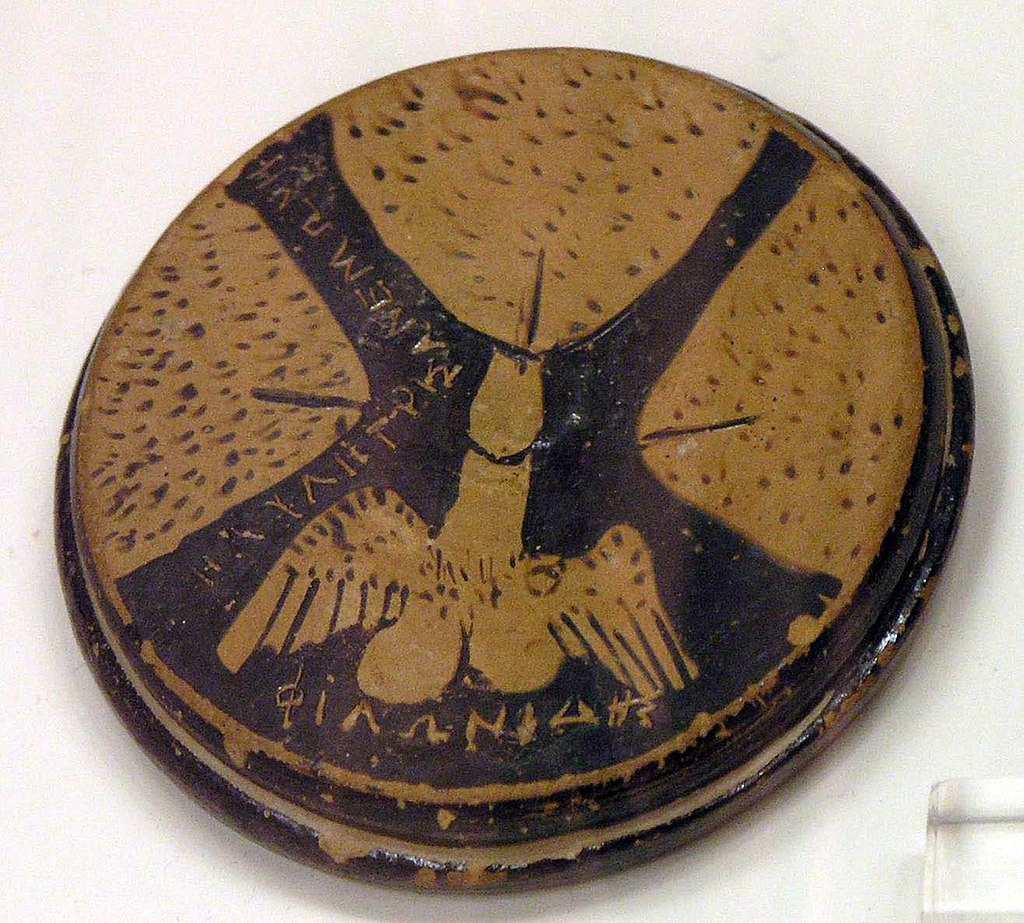
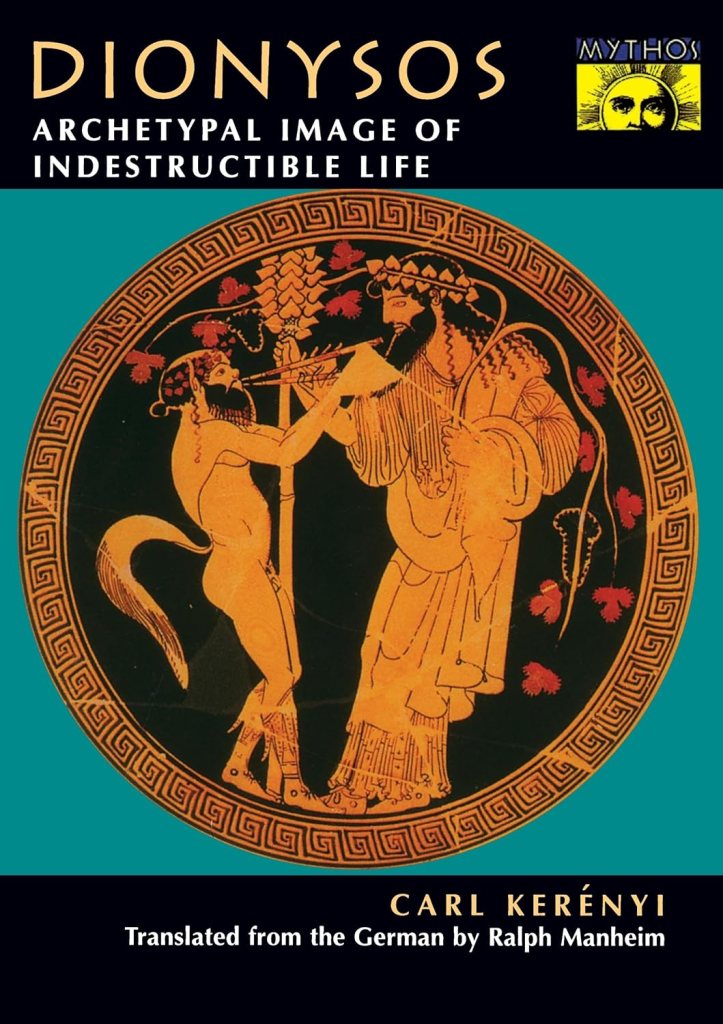
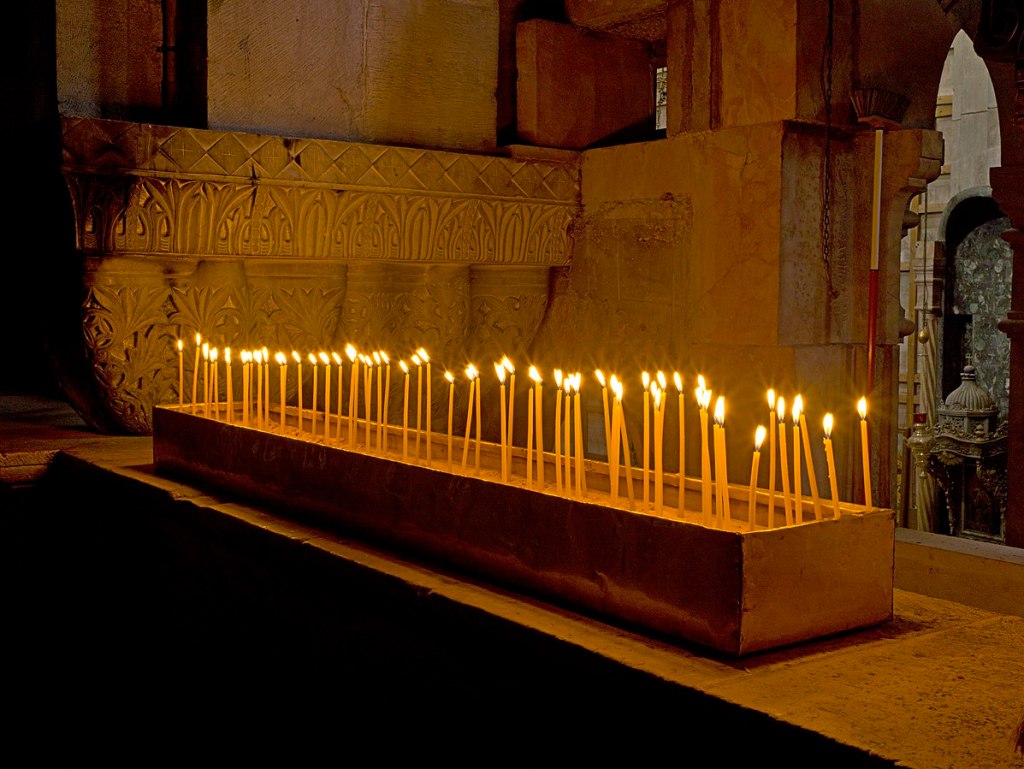

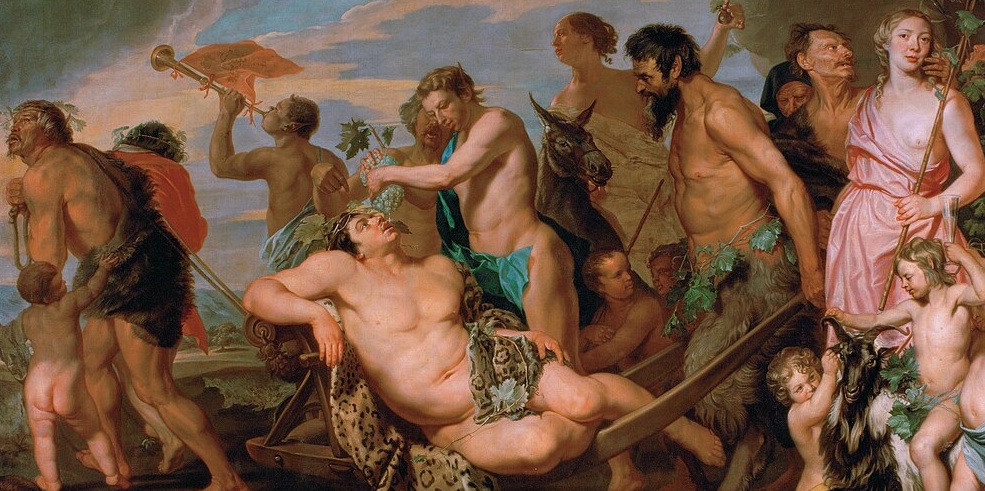


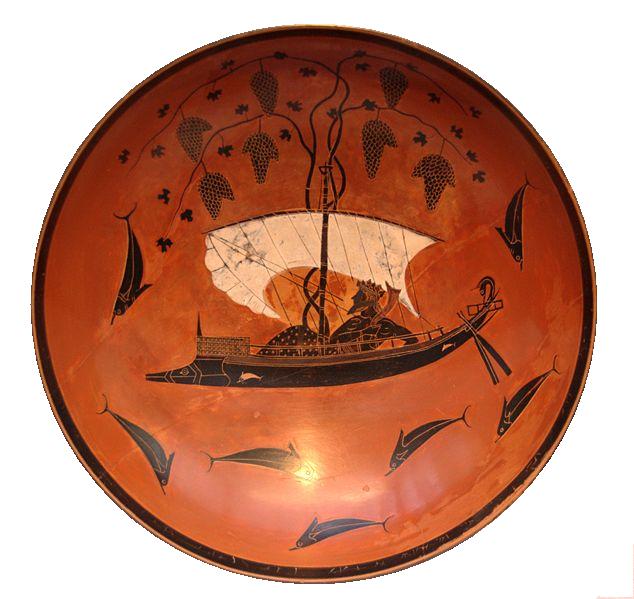


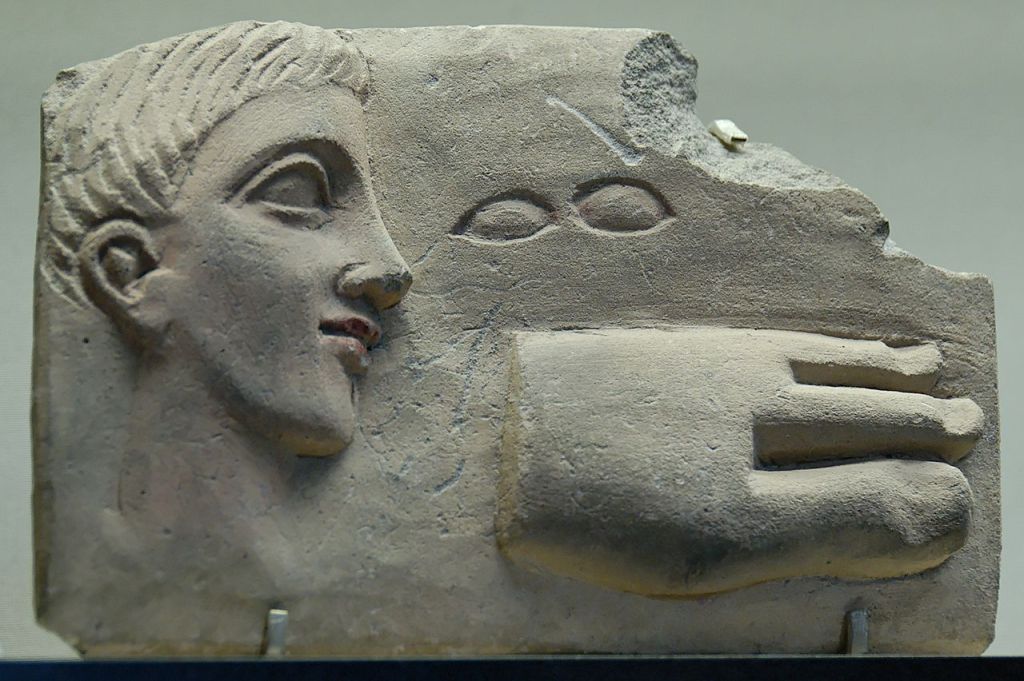

 The Thyrsus
