

Offerings and sacrifices are common across nearly all major religions, serving a similar function in Hellenic and Mediterranean traditions. At their core, they are gifts presented to the divine as acts of devotion—sometimes with the hope of a reciprocal response from the gods.
But what exactly are offerings, and why do we make them?
In Homo Necans: The Anthropology of Ancient Greek Sacrificial Ritual and Myth, Walter Burkert notes that sacrifices and offerings were shaped by specific circumstances and contextual needs. In ancient Greek religion, these acts formed the foundation of worship, often serving to acknowledge the gods’ benevolence. However, offerings could also be made for supplication—to seek forgiveness, ward off misfortune, or appeal for divine favour. Because of this, there is no single purpose for offerings; their significance depends on the context in which they are given.
*****
Sacrifice in History
Today, the word sacrifice carries strong connotations, often evoking images of blood rituals. However, at its core, sacrifice simply means to make something sacred. Any offering given to the gods is, by definition, a sacrifice—a gift that becomes holy through devotion.
There are many types of sacrifices in ancient Greek religion, each with its own purpose and ritual:
Animal Sacrifice – Often the most controversial form of offering. In antiquity, there was no industrial meat industry, refrigeration, or large-scale distribution. Animals were typically slaughtered and consumed immediately. The Greeks acknowledged the sacredness of life and often believed the sacrificial animal was temporarily inhabited by a god and had consented to its death. A ritual was performed in which barley was sprinkled on the animal’s head; when it bowed to eat, it was seen as giving its approval and was slaughtered. Specialist priests then carried out the butchering, ensuring the meat was safe for consumption and free of ill omens. The edible parts were distributed to the people or temple priests, while the bones and fat were burned as an offering to the gods. In some cases, the entire animal was burned in what was known as a holocaust, a sacrifice reserved for chthonic (underworld) deities, to whom it was considered dangerous or taboo to share an offering with the living.
First-Fruit Offerings (Aparchai) – Meaning “beginnings taken from the whole,” these were offerings of the first successful yield of food as an act of gratitude. This included the first grains or fruits of a harvest, the first catch of a hunt or fishing trip, and similar firsts in other activities. These offerings were either placed in sacred spaces, burned whole, buried, or submerged in water.
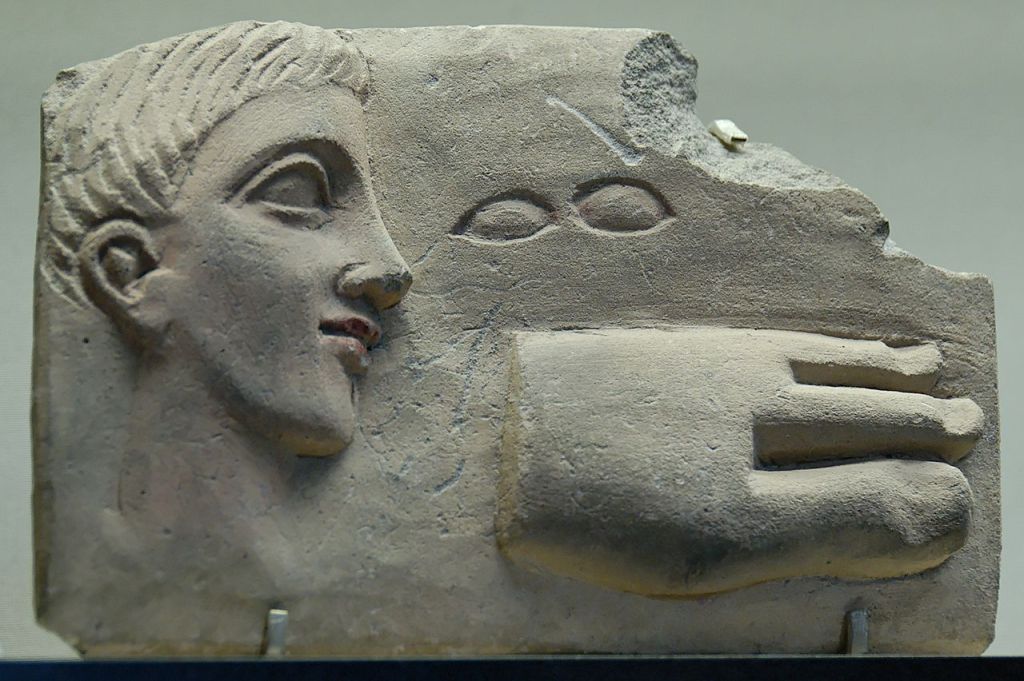
Votive Offerings (Anathemata) – Given in times of distress, as acts of supplication, or as part of fulfilling a vow. These could include physical objects such as sculptures, artwork, entire animals (holocaust sacrifices), or even the establishment of shrines and sanctuaries. War spoils were sometimes dedicated to the gods after victory. A subcategory, Ex-Voto offerings, included sculpted body parts representing ailments, such as carved feet or hands, symbolizing healing petitions.
Libations – Liquid offerings were among the most common and varied in form. Sponde (wine/liquid offerings) were poured at the beginning of meals or sacrifices, while Choe (libations for the dead or underworld gods) included milk, honey, oil, or water poured onto graves. Olive oil was commonly offered in sanctuaries or used in purification rituals.
Food and General Offerings – Everyday items such as fruit, vegetables, honeycomb, oil, and wool were offered regularly. Some were scraps or excess household goods, while others were complete and intentional gifts. During certain festivals, special food offerings were made to honour the dead and supplication, such as a pottage of grain, beans, and seeds mixed with water, honey and salt.
Foundation Offerings (Hidryein) – When constructing a building, temple, or home, a ritual offering was made to consecrate the foundation. This often involved burying precious heirlooms, statuettes, or ceremonial pots, sometimes accompanied by animal sacrifice. This practice reflected a form of “magical thinking,” intended to bless and protect the structure.
Substitute Offerings – Not everyone could afford grand sacrifices. Instead, people offered small votive objects, usually made of clay or metal, representing animals such as cows, goats, pigs, or chickens. These miniature substitutes were donated to temples, buried, or thrown into wells, and are now among the most common artifacts found in museum collections.
Incense Offerings – Resins such as frankincense, valued as highly as gold in antiquity, were considered luxurious offerings. However, a variety of aromatic herbs and resins were burned to honour the gods, as their rising smoke was believed to carry prayers to the heavens. Perfume and essential oils were also used.
Dedications and Acts – Ancient poets often began their works with prayers to the Muses, dedicating their creative efforts to divine inspiration. This extended beyond poetry to include various human activities—sports, education, competitions, and labour—demonstrating that actions themselves could serve as offerings.
Initiation and Coming-of-Age Offerings – During significant life transitions, individuals would offer symbols of their past selves to the gods. Parents dedicated an infant’s first lock of hair, youths left behind their childhood toys and charms, and young men sacrificed their first beard hair. These acts marked the passage into a new stage of life.
Funeral Offerings – Often drinking cups, pottery, food and drink offerings. These were dedicated to the deceased and accompanied them in their burial or interment of ashes. This included individualised offerings or objects that the person preferred in life. Grave monuments can also be included, some people commissioned statues for grave sites. While other funeral objects include totenpass written instructions on how to navigate the afterlife. Coins are sometimes found in grave finds, but the supposed tradition of Charon’s obol was not as common as some may believe today.
A Life Dedicated to the Gods – In ancient inscriptions, like gravestone epigraphs, people often declared their lives as offerings to the gods. A lifelong devotion to a deity, sometimes through formal initiation into a religious cult. Such commitments were considered sacred acts of dedication.
*****
Sacrifice in Modernity
Having been part of the modern Hellenic Polytheist community for years, I’ve seen that many people struggle with the concept of sacrifice and offerings. This is understandable, as these practices can feel unfamiliar compared to other religious traditions. Additionally, there is no strict orthodoxy or universal liturgy dictating how offerings should be made. While this lack of centralised authority can create uncertainty, it also allows for flexibility, creativity, and personal adaptation.
Below, I address some common concerns and questions about offerings in modern Hellenic Polytheistic practice.
1. Animal Sacrifice
If someone has the ethical freedom, skills, and resources to perform animal sacrifice, I believe it is entirely acceptable. Some modern practitioners who own small farms follow traditional methods, similar to those used in antiquity. However, as historical precedent shows, substituting animal sacrifice with other offerings is equally valid.
If you are uncomfortable with consuming or harming animals, that is also a legitimate choice—vegetarianism was practiced in certain ancient Hellenic and Mediterranean religious sects/cults. However, it is important to respect those who believe that honouring the animal they consume is a legitimate form of devotion. Animal sacrifice, when performed correctly, is not an act of cruelty but a way to give thanks for life and respect to the animal.
2. How Should I Dispose of Food Offerings?
Ideally, food offerings should be disposed of in an environmentally responsible way. If your area has a composting program, this is a great option. However, if you live in an urban environment without composting access, placing food in the garbage (preferably unsealed to reduce CO2 emissions) is fine. Some foods may also be safely buried outdoors, though be mindful of wildlife that may be harmed by human food.
Importantly, food offerings are not mandatory. You can substitute them with other forms of devotion if needed.
3. How Should I Dispose of Liquid Offerings?
The best method, as in antiquity, is to pour liquid offerings onto the ground. If that’s not possible, an outdoor plant or even a potted plant indoors can serve as a substitute. If no other options are available, pouring non-oil-based liquids down the sink is acceptable, as they will eventually return to the earth through water treatment processes.
Never pour oil down a sink; it can clog pipes and harm the environment. If you cannot safely dispose of oil offerings, avoid making them.
4. Isn’t This Wasting Food?
As discussed earlier, many ancient food offerings were made from leftovers, such as fruit peels, bones, or food scraps. Whole offerings of animals or first harvests were typically reserved for major state-sponsored religious events.
If you have ethical concerns about food waste, consider alternative offerings, such as donating food or volunteering at food banks and shelters. Remember that acts of service can also be a form of offering.
5. Is Fire Required to Dispose of Offerings?
No. While ancient Greeks often burned offerings due to the presence of hearths and open flames in daily life, fire is not essential. Offerings can be disposed of in other ways, as outlined above.
6. Can I Eat the Offerings?
If you present food as an offering, you should not eat it afterward. An offering is a sacrifice, meaning you have freely given it to the gods. Taking it back is akin to giving someone a gift and then reclaiming it for yourself.
However, you can share a meal with the gods by consuming most of it yourself while leaving a small portion as an offering. This approach has historical precedent but remains a topic of debate within the community. If you choose to eat offerings, that is your personal decision.
7. How Long Should an Offering Be Left Out?
In antiquity, food offerings were typically disposed of immediately—thrown into the hearth, buried, or left for nature. Only in temples and shrines were offerings left out for longer periods, and even then, priests eventually removed them.
Food offerings should not be left out on an indoor altar/shrine for more than 24 hours. Allowing food or drink to rot on a shrine or altar is not appropriate, it’s unhygienic, and encourages vermin.
8. What If I Can’t Have an Open Flame Where I Live?
Many modern living spaces, such as apartments, dorms, and shelters, prohibit open flames, making it difficult to burn incense or candles. Fire offerings are not required; you can use alternatives such as reed diffusers, steam diffusers, or essential oils. You can also use electronic candles or just a light source.
Additionally, while oil lamps and hearths were commonly used in ancient Greece, candles were not exactly a traditional part of Hellenic religious practice—they are a modern addition.
9. Do I Need to Give Daily Offerings?
This is a personal decision. Some people enjoy the routine of daily offerings, while others prefer weekly or seasonal devotions.
Personally, I dedicate much of my time to educating and writing in honour of the gods, which I find more meaningful than performing small daily rituals. I strive to keep the gods in my thoughts at all times and dedicate my actions to them. Others may prefer a more structured practice, and that is completely valid. The goal is to cultivate a connection with the gods in a way that is meaningful to you.
10. Will I Offend the Gods with Certain Offerings?
I will discuss this further in the next section, but in general, it is extremely difficult to offend the gods with an offering. The gods are not petty beings waiting to take offense at small missteps. Most deities will accept a wide variety of offerings, including “new world” foods such as chocolate, coffee, tea, alternative alcohol like gin, rum etc., and soft drinks (soda/coke). If it is something that humans can consume and enjoy, it is generally acceptable as an offering.
*****
Taboos in Offerings
There are specific myths in which gods rejected certain offerings from humans. Generally, this relates to anything considered Miasmic (impure), which usually includes things associated with human mortality.
As a rule of thumb, human remains, blood, bodily fluids, and waste should not be given as offerings. I won’t go into the deeper theological reasons here (that would require an entirely separate article), but suffice it to say that our mortality stands in stark contrast to the nature of the immortals.
That said, there are rare circumstances in which human-related offerings may be acceptable. These situations typically involve highly specialised ritual work—such as certain sexual rites or necromantic practices—and should only be performed by experienced ritual specialists who truly understand what they are doing.
For most practitioners, it’s best to keep things simple and stick to the offerings outlined earlier. When in doubt, err on the side of caution. “Don’t fuck around and find out”.
*****
Cult-Dependent Taboos
Years ago, I remember an online dispute where someone offered jellybeans to Aphrodite. If you’re unaware, most jellybeans contain gelatine, which comes from animal collagen—often from pigs. The controversy arose because some cults of Aphrodite prohibited pork as an offering, due to the myth in which a boar killed her lover, Adonis. This led to the modern online belief that all pork-related products are unacceptable offerings to her.
However, after deeper research, I found that this is an oversimplification. While some cults did prohibit pork offerings to Aphrodite, others—especially in Cyprus—actually encouraged them.
Each temple, cult, and worshiper had their own set of restrictions regarding offerings, often inscribed in stone outside the temple. These conditions were meant to maintain ritual purity for temple entry and participation in specific rites. Unfortunately, in modern discussions, people sometimes take these ancient temple-specific rules and apply them as universal taboos for all worshippers, which isn’t necessarily accurate.
That said, certain offerings were considered unacceptable in specific cult settings. Some examples include:
Ivy was generally prohibited in temples of Hera, as it is sacred to Dionysos.
Pork was an uncommon offering to Aphrodite in some regions.
Mint was forbidden in temples of Persephone, as it is linked to an extramarital lover of Hades—though it is possible it was used during the Eleusinian Mysteries.
Onions and garlic were often prohibited in temples of Demeter and other gods.
Fava beans were avoided in temples, as some cults believed they contained human souls.
It’s important to note that these prohibitions were cult-dependent and usually tied to the specific customs of a temple, not general worship. Offerings that were restricted in a temple setting might still be perfectly acceptable during festivals or household rites.
So, if you want to give jellybeans to Aphrodite, go ahead!
*****
Final Words
When I set out to write this article, I thought it would be a straightforward topic—simple, even. But as I explored the depth and variety of offerings in ancient Hellenic and Mediterranean religions, I quickly realised just how complex and nuanced this practice truly is. Offerings and sacrifices were deeply ingrained in daily life, but they were not rigid, burdensome, or uniform across all situations. Instead, they adapted to context, necessity, and individual means.
One of the most important takeaways is that offering to the gods does not need to be elaborate, excessive, or expensive. The ancient Greeks recognised this too; while grand festivals and large sacrifices were significant communal events, household worship often consisted of small, simple acts—clean water, a crumb of bread, a splash of wine. Intent and devotion mattered far more than scale or luxury.
If you are new to Hellenic Polytheism and feel uncertain about offerings, it is absolutely fine to start simple. A small token of gratitude—a piece of fruit, a libation, or even a few kind words spoken out loud—is more than enough. If physical offerings feel impractical or uncomfortable, remember that devotion is not limited to tangible gifts. Poetry, sports, music, storytelling, art, dance—these too can be sacred acts of offering. Even the way you live your life, the care you show to others, and the passions you pursue can all be dedicated to the gods.
Ultimately, what matters most is your connection with the divine and the personal meaning you find in your acts of devotion. Worship should never feel like an obligation or a strict set of rules to follow. Instead, it should be a meaningful practice that enhances your spiritual life and deepens your relationship with the gods.
So, whether you offer a grand feast at a festival or a simple breath of gratitude in the morning, remember that the gods are not demanding—they are present, listening, and receptive to all offerings.
 The Thyrsus