
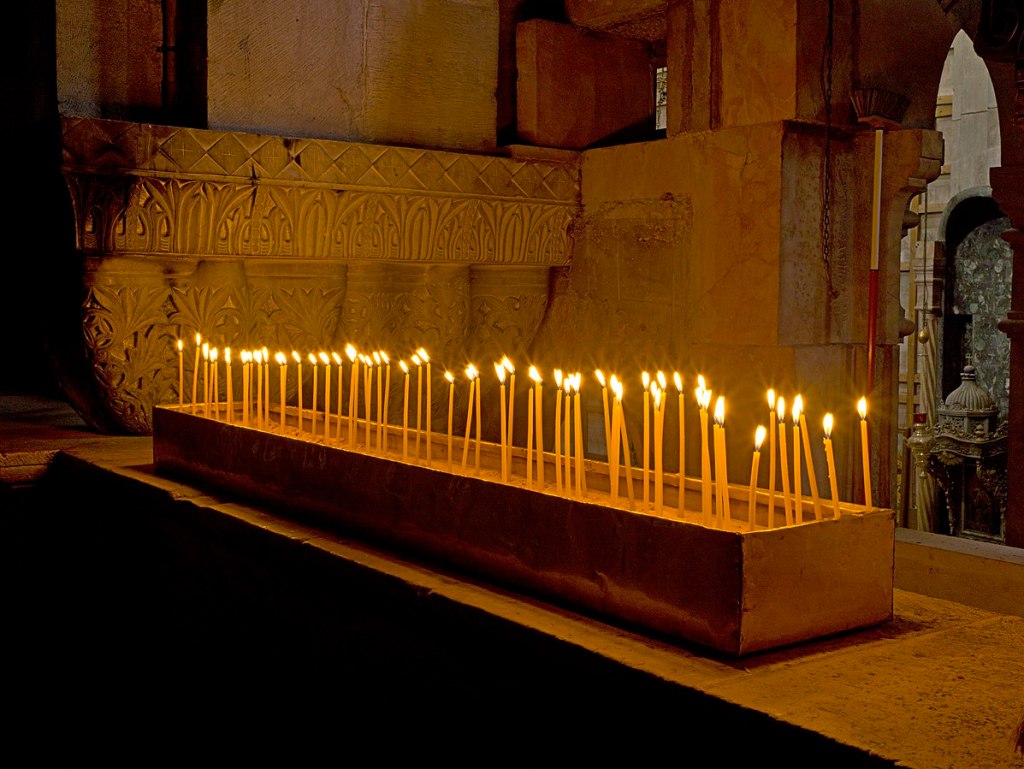
The use of candles dates back to prehistory, with some of the oldest examples found in Egyptian tombs. Candlesticks have also been discovered in Babylonian and Minoan cultures. Most early candles, however, were made from animal fat—known as tallow—which burned with a smoky flame and produced an unpleasant smell.
The ancient Greeks were particular about smell, cleanliness, and aesthetics—so they rarely used candles. Instead, their main sources of light were oil lamps and torches. Olive oil, a major commodity in Greece then and now, was a regular household item. It was used in everything from cooking and hygiene to lighting, making it an essential and widely available part of daily life.
It’s possible that some temples and wealthy households used beeswax candles, but beeswax was extremely expensive and primarily reserved for practical uses like the lost-wax process in bronze casting. As a result, using it for something as temporary as a light source was considered both impractical and costly.
In general, the Greeks rarely used candles. They were not part of religious rituals, and there was no such thing as “candle magic” in ancient Greek practice.
The Romans, in contrast to the Greeks, were pragmatic and used whatever materials were available for lighting. As they rose to power and began conquering Greek territories, we see a shift in the economy—tallow candles became more common, especially among the lower classes. Candle holders also appear more frequently in archaeological finds from the Roman period in Greece.
From that point through to the nineteenth century, tallow candles were widely used across most European cultures. They remained the primary source of lighting until the advent of gas and electricity, which began to replace them around the turn of the twentieth century.
Interestingly, the paraffin wax candles we use today were invented after the lightbulb. Paraffin is a byproduct of petroleum. While the wax itself naturally has no smell, burning it can release potentially harmful chemicals into the air. It is recommended to burn these candles in areas of good ventilation.
I bring this up because I often see people in Hellenic Polytheist communities recommending, or even insisting on, the use of candles for rituals and magic—despite these being entirely modern additions. I’m not here to dictate how anyone should worship or perform rituals; I fully support adaptation and the development of new practices.
My aim is simply to point out that the use of candles has little to no historical precedent in ancient Greek religion and is by no means a necessary part of worship.
 The Thyrsus