
Before I begin, I’ll make a quick note on spelling. It is very common for newcomers to spell “Altars” as “Alters”. Remember, it is spelled with an A, not an E. Alters means to change something, such as “I alter my altar.”
Altars and shrines are spaces that many practitioners of Hellenic Polytheism (and other religions) establish to invite the divine into their homes. These sacred spaces serve as focal points for worship and prayer, but what exactly is the difference between an altar and a shrine?
In Hellenic Polytheism, an altar is a flat surface used for performing rituals, offering sacrifices, and presenting gifts to the gods. In ancient Greece, altars were typically located outside temples, as many ritual activities—such as animal sacrifice—could be quite messy. There were various types of altars, each serving a distinct purpose. Some contained a hearth, where offerings were burned, while others were designated for butchering animals, presenting votive offerings, or distributing meat to devotees and priests.
Altars primarily served a practical function rather than an aesthetic or devotional one. While some featured relief sculptures or inscriptions dedicating them to specific gods, they were not considered religious icons or representations of the deities themselves.
A shrine, on the other hand, is a space or object dedicated to a god or multiple gods. Like altars, shrines came in various forms, but most were housed inside temples, within small purpose-built sanctuaries, or inside homes. Shrines often featured icons, statues, or aniconic symbols representing the divine. Some of the earliest shrines may have been simple cairns or gravestone markers.
A specific type of shrine, known as a Heroön (ἡρῷον), was dedicated to heroes and notable figures such as leaders, writers, and performers. These shrines were often built near or on the burial site of the honoured person or in a location connected to their life—such as their former home or workplace.
Shrines could be public or private. Public shrines were open to the community and often maintained by clergy or local groups. These spaces allowed worshippers to gather, honour the gods, and sometimes leave offerings. Private shrines, on the other hand, were located within homes, typically near the hearth in a communal space. They were dedicated to household gods, such as the Agathodaemon, as well as ancestors. While these shrines were deeply significant to the family, they were not as important to outsiders. The hearth played a central role in household shrines, serving as the place where offerings were ritually disposed of.
Modern Altars and Shrines
Today, individual practices vary based on space, resources, and personal preference. Many people have shrines that also serve as altars, though a shrine does not necessarily need to function as an altar.
In my own practice, I maintain a main private altar/shrine dedicated to Dionysus, where I perform rituals and make offerings. Additionally, I have three other shrines dedicated to different gods. I also keep a public altar/shrine in my home for guests who wish to leave offerings or perform magic. I recognise that this setup is a privilege, and I don’t expect others to follow the same approach.
Establishing an altar or shrine is a deeply personal act. It depends on your resources, available space, and the purpose of your devotion. What matters most is that the space is dedicated to the god you wish to honour while also being meaningful and accessible to you. Though it belongs to the god, it should also serve as a place that strengthens your devotion and connection with them.
Recommendations for establishing an Altar/Shrine
Any flat surface can serve as an altar or shrine, such as a shelf, small table, or even a bedside table. Personally, I prefer small coffee tables or repurposed furniture that fits naturally into my space.
Before setting up the altar or shrine, I always clean the surface. Regular household cleaning products work fine, but if you’d like to incorporate ritual purification, you can prepare khernips (lustral water) for cleansing.
I also use an altar cloth to create a sacred barrier between the surface and the items placed on it. Thrift stores are a great place to find scarves or sari fabrics that work beautifully for this purpose.
Next, I arrange items that help me connect to the god. This often includes icons or images I’ve previously activated through a simple ritual. To do this, I cleanse the icon and formally invite the god to inhabit it. This process doesn’t need to be complicated—just a sincere declaration of dedication. Since my primary deity is a nature god, I also love incorporating houseplants and other living elements into my shrines.
Once the shrine is set up, I activate the entire space through prayer and offerings. This invitation ritual isn’t elaborate—I simply call upon the god to feel welcomed into my home.
Maintaining Altars/Shrines
Altars and shrines should not be static; they can be moved, rearranged, and interacted with. Items can be added or touched, but I am cautious about permanently removing non-degrading offerings unless they are disposed of appropriately (more on that later).
On my Hermes shrine, I collect coins, which I donate once I’ve gathered a sufficient amount. However, I always replace them with new coins to maintain the shrine’s function and symbolism.
When giving offerings, I start at my main altar, present the offering to each of my shrines while saying a prayer, and then place the offerings on the main altar. If the offering is food or drink, I dispose of it within 24 hours. Ideally, disposal should be done in the safest and most respectful way possible. Traditionally, liquid offerings are poured onto the ground, while food offerings are burned or buried. However, in modern urban settings, adaptations may be necessary. It’s acceptable to pour liquids down the sink (except oil) and to dispose of food in the garbage—or better yet, compost it.
How often you clean your shrine is up to you. Some people follow traditional Noumenia rites every new moon, but I personally clean my shrines at least once every six months. This process includes dismantling the shrine, washing altar cloths and statues, and reconsecrating the space.
Cautions
– Fire Safety: If you use fire on your altar or shrine, exercise caution—especially around fabrics. Always place fire sources on a fireproof surface, and avoid having open windows or airflow that could blow flames onto fabric. It’s highly recommended to have a fire extinguisher or fire blanket on hand as a precaution.
– Cleanliness: Never allow food or drink to rot on your shrine. Regularly check for mould, dust, or dirt buildup, as a shrine is a space for the gods and should always be kept clean and inviting.
– Pet Safety: If you have pets, consider pet-proofing your shrine or altar. Be mindful of the offerings you give and ensure that any indoor plants placed on the shrine are pet-friendly. Cats, in particular, are notorious for knocking over shrine items—don’t take it personally if they do! I’ve found that placing my shrine in a location that’s difficult for my cat to access helps.
– Respectful Behaviour: Depending on your relationship with the deity, be mindful of what activities take place near your shrine. Some gods may not appreciate certain private activities, such as sexual acts, occurring in front of their sacred space. If your shrine is in your bedroom and space is limited, consider covering it with a cloth during private moments.
– Personal Cleanliness: In Hellenic Polytheism, ritual purity is important. Always ensure that you are clean before approaching a shrine or performing rituals.
Dismantling/Deconsecrating
Life circumstances change, and sometimes we need to downsize our shrines or may even lose the connection we once had with a god. This is natural, and it’s okay. If you need to deconsecrate a shrine or altar, you can do so respectfully by explaining your reasons to the god and then removing the sacred objects.
What you do with these objects depends on your preference and situation. Some of mine have been destroyed, buried, or donated. In antiquity, it was common for people to bury statues and permanent offerings, leave them out in nature, or dedicate them to a local temple.
If your situation is temporary—such as moving to a new home—it is perfectly acceptable to store your sacred objects until you are able to set up a shrine again.
Conclusion
Altars and shrines serve as powerful tools for devotion, providing a tangible space to connect with the gods. Whether simple or elaborate, public or private, these sacred spaces reflect both tradition and personal practice. The way we establish, maintain, and interact with them is deeply individual.
Regardless of size or complexity, what matters most is intention. An altar or shrine should be a place where both you and the gods feel welcome—an evolving space that fosters devotion, reverence, and spiritual connection. By caring for these spaces mindfully, we honour the traditions of the past while adapting them to our modern lives.
Above all, remember that your practice is your own. Whether you have a grand altar or a small, discreet shrine, what truly matters is the sincerity behind your worship.
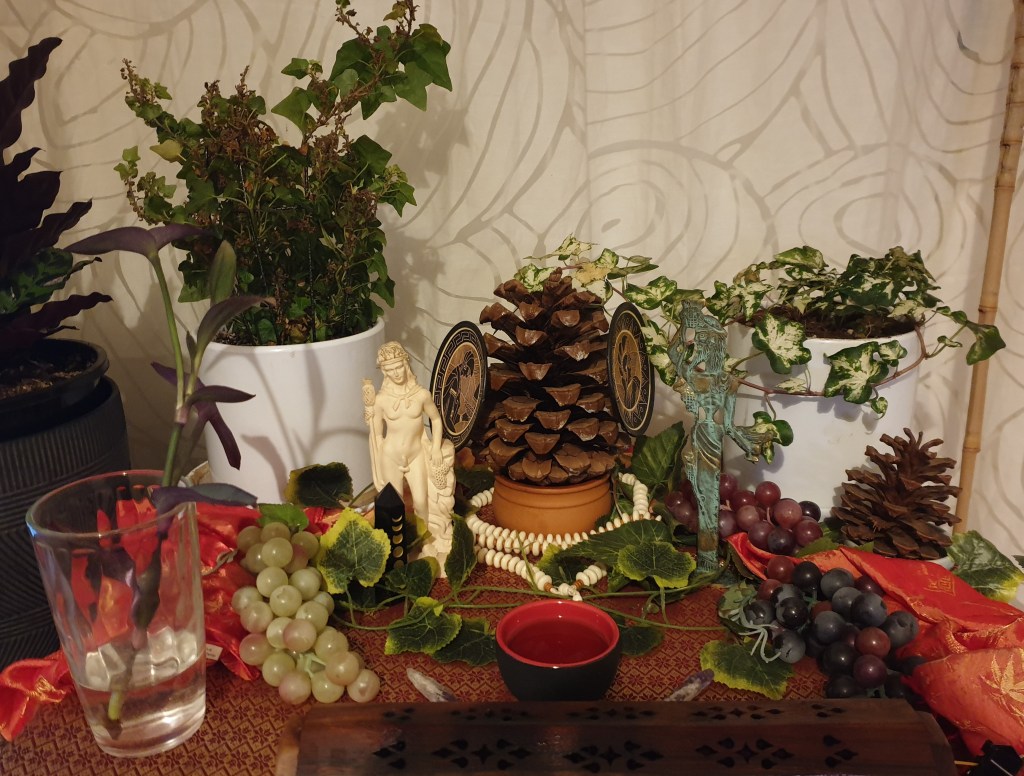
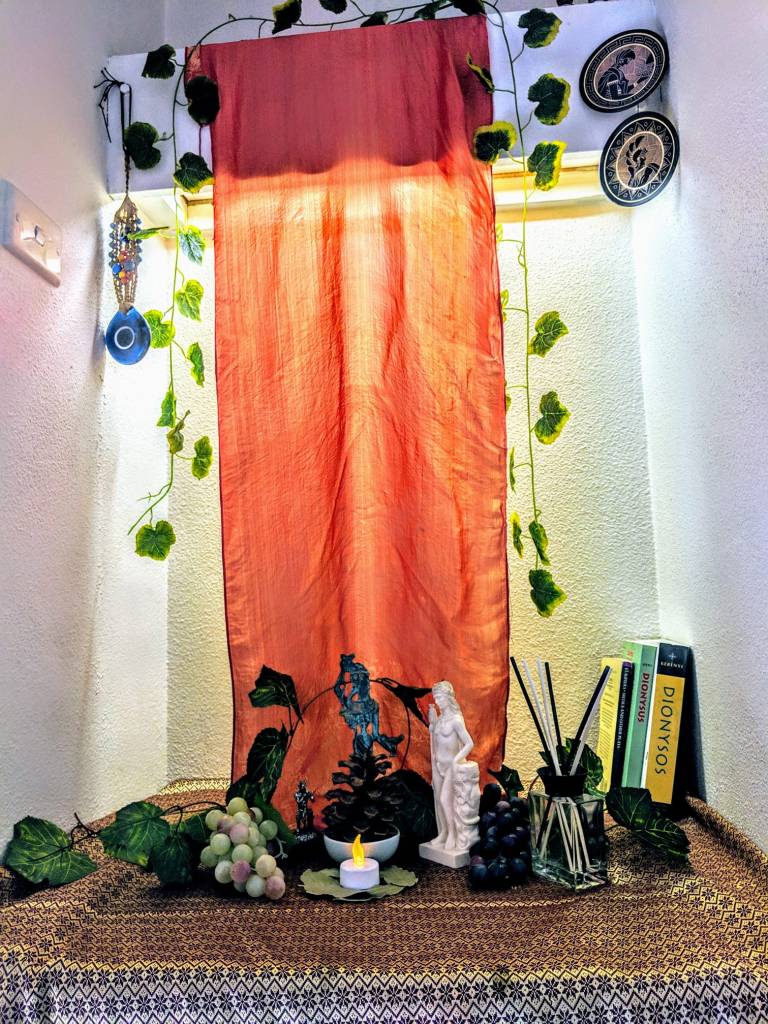
Below are examples of some of my shrines/altars past and present.




 The Thyrsus